It’s been quite a trip through Java. Braving daunting distances on rickety old busses, we’ve covered a serious amount of ground. We’ve travelled alongside chickens, with our bags piled on top of us, feet inside a market trader’s basket due to lack of space on the bus. But we made it, and were rewarded for our endurance by some truly once-in-a-lifetime experiences.
Merapi was our first stop, where we groaned our way out of bed at 3am for a sunrise hike in the hills. Merapi is the most active volcano in the world, having had a full-scale explosion in 2010, the damage from which can still be seen in the landscape. The surrounding area has new forest growing amid the scorched remains of huge old trees, with lava trails hardened into new riverbeds.
This slideshow requires JavaScript.
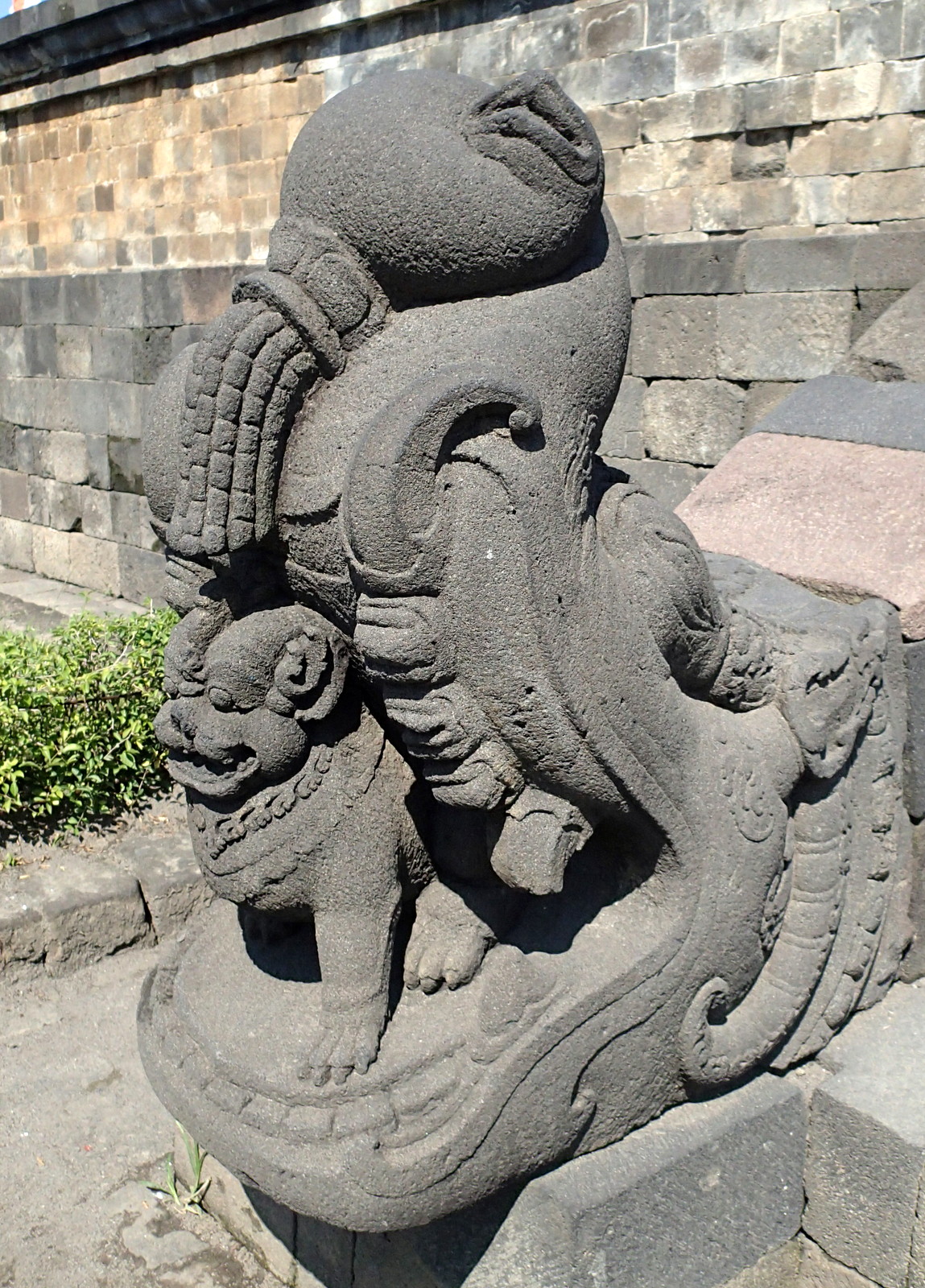
Next stop was Borobudur. It’s a huge, 1400 year old Buddhist temple that was overgrown by forest for circa 1000 years until it was rediscovered in the 19th Century by the famous Sir Raffles. The loving detail carved into each stone coupled with the beautiful landscape make an awe inspiring scene. My personal highlight is the tale of how historians have studied the boats depicted in the stone carvings. Doubts about the ancient Indonesians’ ability to sail to Africa had to be cast aside when they actually sailed a full-scale copy all the way to Madagascar.
Outside the temple of Borobudur
One of the thousands of carvings in the stones
Bromo was our next destination. Rising from a bed of volcanic ash, the lunar-like slopes of Bromo and its neighboring peaks are a photographers dream. It’s a shame Ferg’s SLR camera chose this moment to stop working. (And lucky we have a half-decent pocket camera too). It was my first chance to climb to the rim of a volcano’s crater and peer inside its mouth. With sulphurous gas swirling constantly from the centre I found it terrifying to be so close to such a natural wonder, and felt very far from home.
This slideshow requires JavaScript.
We were unsure if it would be worth the journey to see another volcano at Ijen. It involved 7 hours on the worst quality bus we’ve seen so far (quite a claim) plus a further 3 hours in a jeep, and a vigorous walk. Astonishingly, it was worth every minute. Quite unlike the other 2, Ijen has a sulphurus lake inside its crater. It’s a steep climb, but as you round the final corner you are rewarded with a change in landscape so dramatic and unique, you feel you have entered another world.
This slideshow requires JavaScript.
Java is quite simply the most astonishing place I’ve ever been. Arduous and uncomfortable, yes, but it has left me with a sense of being exceptionally lucky to have seen such things. It reminds you that ‘normal’ life at home is far from normal, the vast majority of people in the world do not live in a small semi in suburbia like ours.
I wonder how it will impact the children to have seen such amazing sights so early in life?
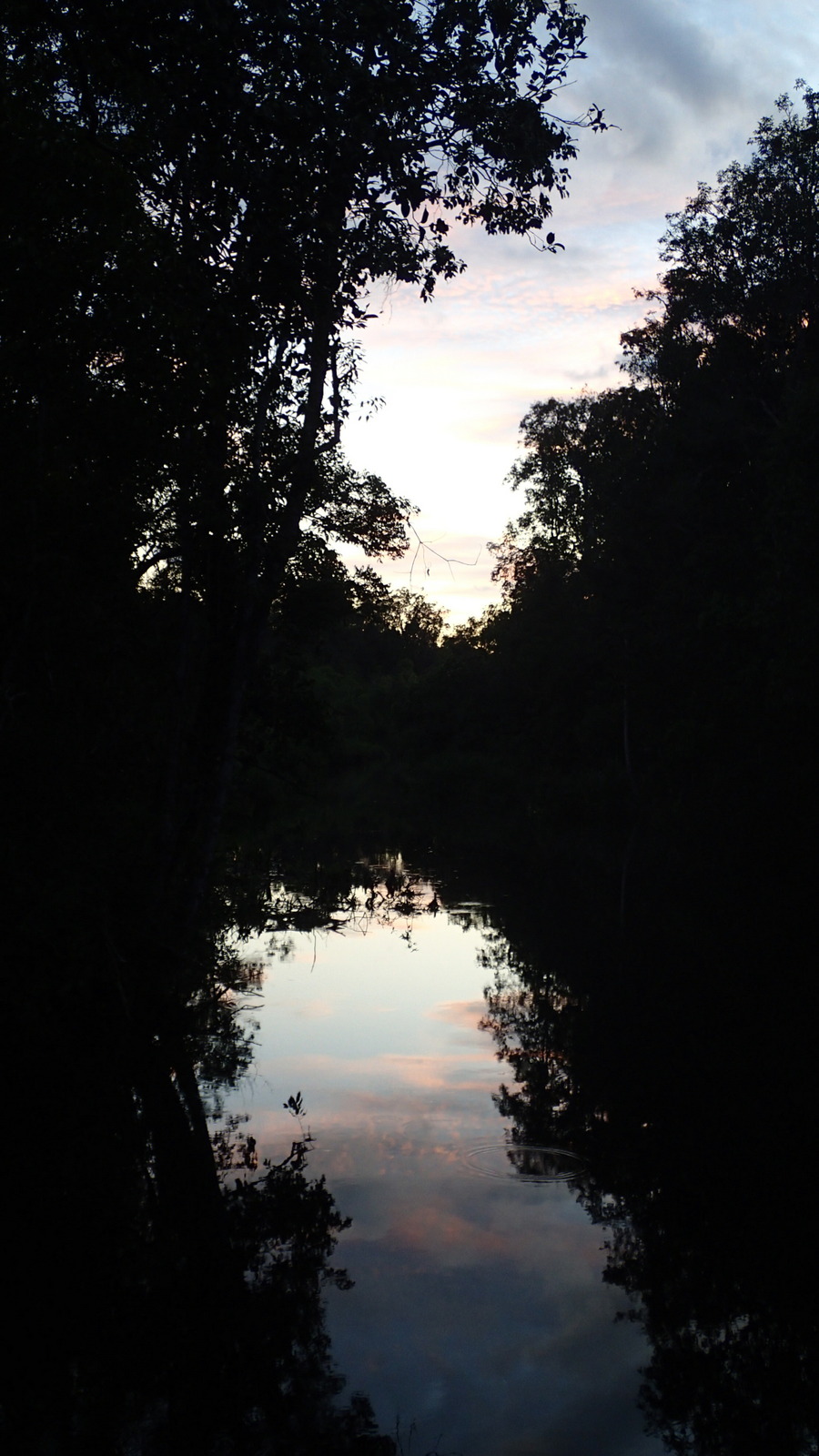
It’s early morning – not even five-thirty – and I’m standing alone on the open deck of our klotok, the wide-decked, open-sided river boat we’ve hired for three days of travel deep into the jungles of Borneo. I feel a very long way from home.
All around, the river water is a peaty red, darkening to glossy black away from the banks where it flows smoothly past our mooring. The blackness is broken only by the reflection of the brightening sky and the occasional deep splash of a surfacing fish. With each splash I turn quickly, hoping I’ll see one of the crocodiles that ate the traveller who ignored warnings not to swim on this very spot a few years ago. I don’t see any but that doesn’t mean they aren’t nearby. The shadows, reeds and fallen trees along the banks could easily hide a dozen crocodiles.
My eyes search the thick jungle swamps on each bank. There are macaques here. I can hear their woo-wooing nearby but haven’t managed to spot any yet. Not that I’m surprised. Their fur blends perfectly with the soaring white-grey tree trunks. Nor have I seen kingfishers, fly-catchers, hornbills, tree frogs, proboscis monkeys or any of the other thousands of species that make this a “biodiversity hotspot”. Only the insects are visible this morning; dragonflies the length of my middle finger, bees, beetles and smaller, indeterminate creatures I hear as passing buzzes beside my ear. And if our trek into the jungle yesterday is anything to go by, I wouldn’t have to go far from our boat to find thick columns of termites or wild, dangerous scatterings of the fire ants that we all fell painfully prey to.
But I don’t mind that I can’t see anything just now. The forest is alive with life. I can hear it. And somehow, gazing out into the confusion of trees, vines, ferns, water plants and bushes, ears alight with whoops, clicks and bird calls, this feels like the most natural state in the World; in distinguishing the complexities of these sights and sounds, I feel my brain slipping into its natural gear. There isn’t a straight line in sight, nor a single colour that diverges from the forest’s natural greens, greys and browns, except with reds and blacks of the water below and the blue of the lightening sky.
I wonder if any of the orangutans we saw yesterday are nesting nearby. And whether this sensation of oneness and peace is how they feel. Their slow, measured gazes and the way they swing through the treetops at whatever speed each tree bends under their weight seemed to imply so.
We’re moored at Camp Leakey, the longest-running research station in the World, where for the last 40 years , Dr. Galdikas has been observing wild orangutans as well as rehabilitating captured ones.
These thoughts are heightened by the thrill of being so far from civilization. There isn’t a hospital for many hundreds of miles and few roads through the jungle on which to reach one… well, except the charity-run orangutan hospital half-way up-river. I guess they could probably set a broken bone at a push.
It took two full days to get here but today we’ll turn our klotok around and begin the return journey, stopping to visit one more orangutan feeding station on the way. This is the remotest place we’ll visit on our travels. From here on we’ll slowly be returning to modernity.
I was going to end there, leaving this post as an elegy on Man’s Primal Being, Oneness With Nature and other romantic daybreak thoughts. But then…
With a crash, a tree beside us swung forwards, showering leaves onto the river. For a moment I couldn’t see what had caused the sudden commotion. The jungle fell silent. Then, the tree snapped back, the leaves spread out into the current, leaving a single, large orangutan a few metres from where I stood. He watched me. I watched him. As entrances go, I had to admit it was impressively dramatic. Then he swung over to where our boat’s mooring rope secured us to a fallen tree.
Was he going to pull us to shore? Come aboard? He gave the rope an exploratory tug but our klotok is big and would have needed a much more serious effort to shift. Looking disappointed, he gave up and climbed onto a comfortable-looking tree, descending occasionally to pick a pandanas shoot or fish a discarded piece of fruit from the water.
Slowly, the rest of our family awoke, drifting forwards to join the mutual contemplation, orang1 and orangutan.
Then the other klotok moored nearby woke up, too, and began calling and throwing watermelon rinds into the river. The spell was broken; the orangutan moved off and we retreated inside for a breakfast of our own.
[1] In both Indonesian and Malay, orang means “man”. Orang utan means “man of the forest”.
After paying our driver extra to make a detour to a remote coffee plantation we’d read about, we wanted to fulfill our dream of sipping coffee in a coffee plantation in Java. We had images of strolling through the fields in pressed linen suits, as per the Kenko advert from the ’80’s.
We must have left the pressed linen behind somewhere, so we had to make do with our just-climbed-a-volcano clothes (think volcanic ash, sulphur stains, faint eggy smell). And it took quite a long time to find anyone to serve us in the coffee shop part of the plantation. And a bit longer to establish that we might want to buy some coffee.
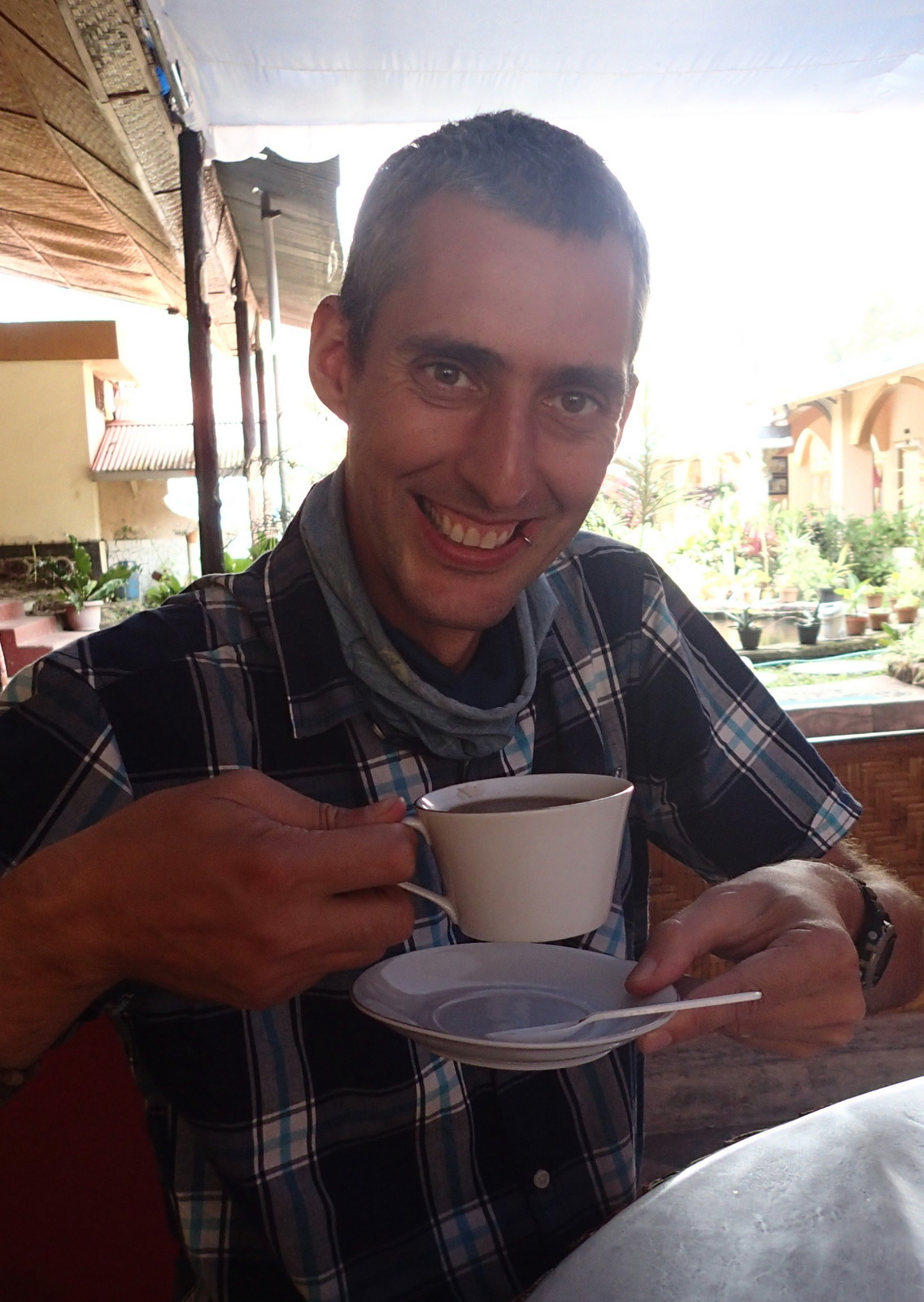
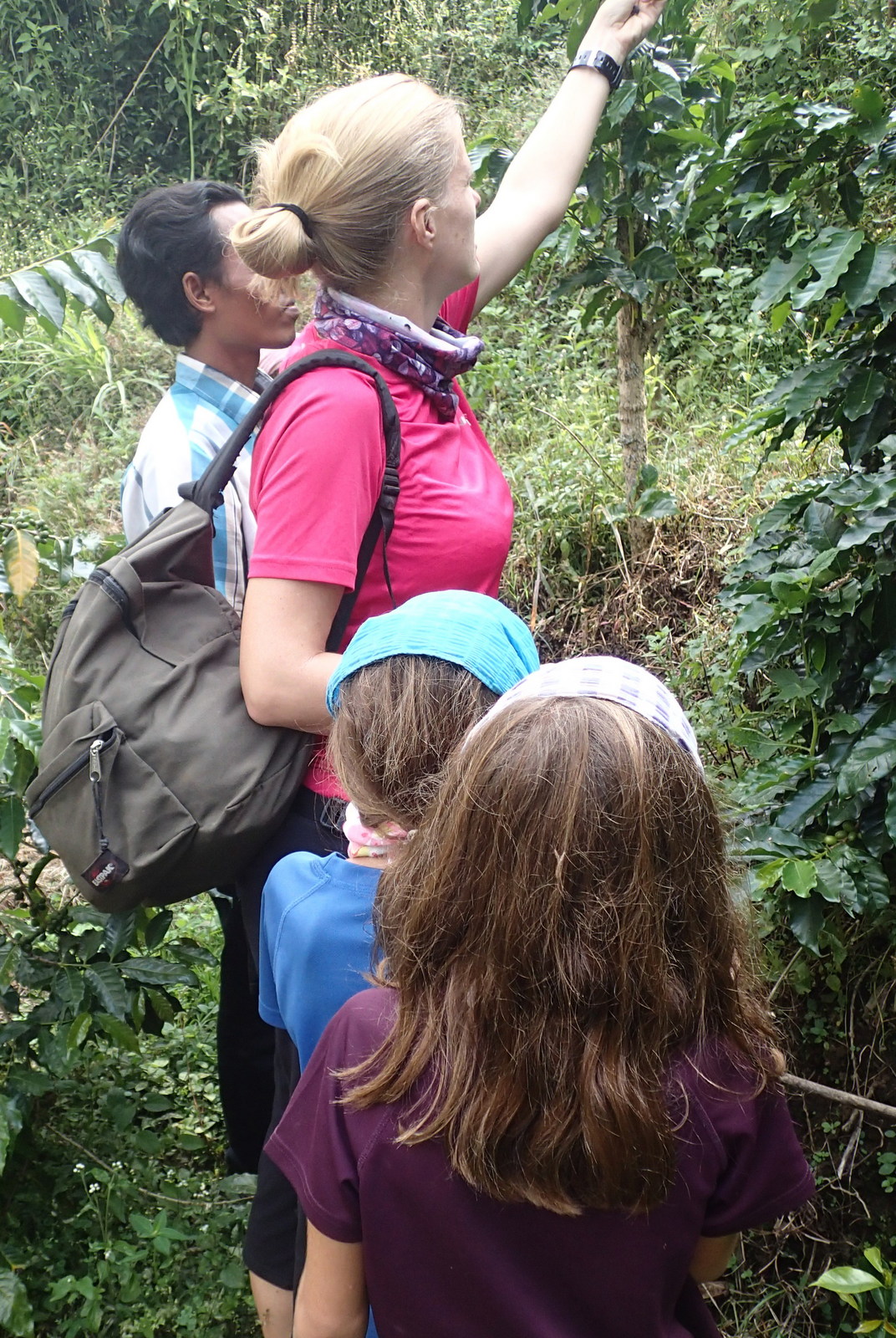
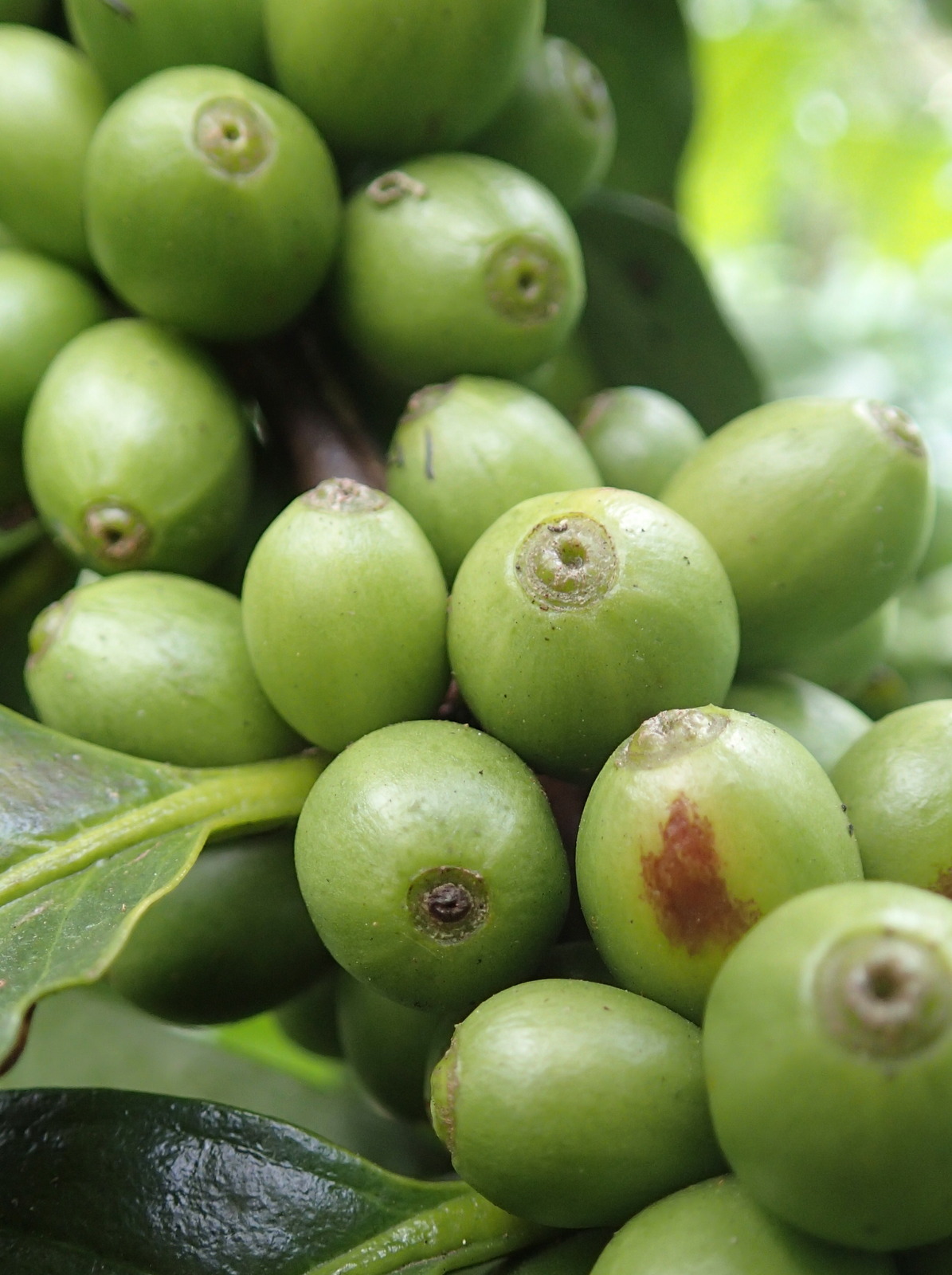
Eventually, we were able to sip our cups of delicious, fresh, Java coffee, and to see the beans being grown.
However, buying some coffee to take away with us seemed like an impossible task. There was a glass cabinet fill of tea bags (!) with one lonely pack of Ijen Volcano Locally Produced Coffee in the corner. After much pointing and smiling, I managed to buy the pack. I tried to ask if they had any more (holding up 3 fingers, pointing, asking ‘You have more?’).
“Sorry, finished,” came the reply.
Like like trying to organise the proverbial party in a brewery, it seems that buying coffee in a coffee plantation is not as easy as it might sound.
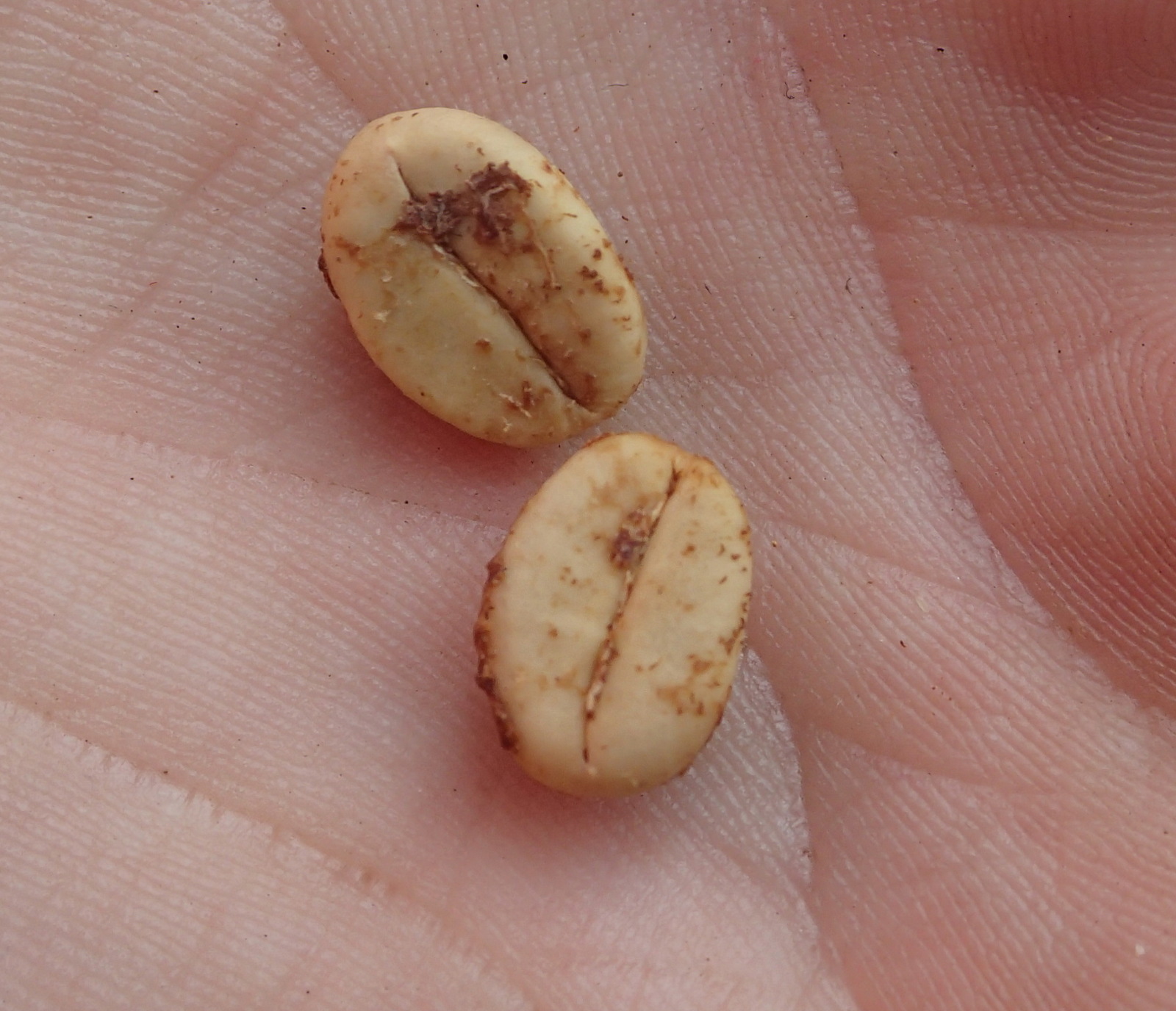
Raw Coffee Beans (straight from the plant, just peel the pod)
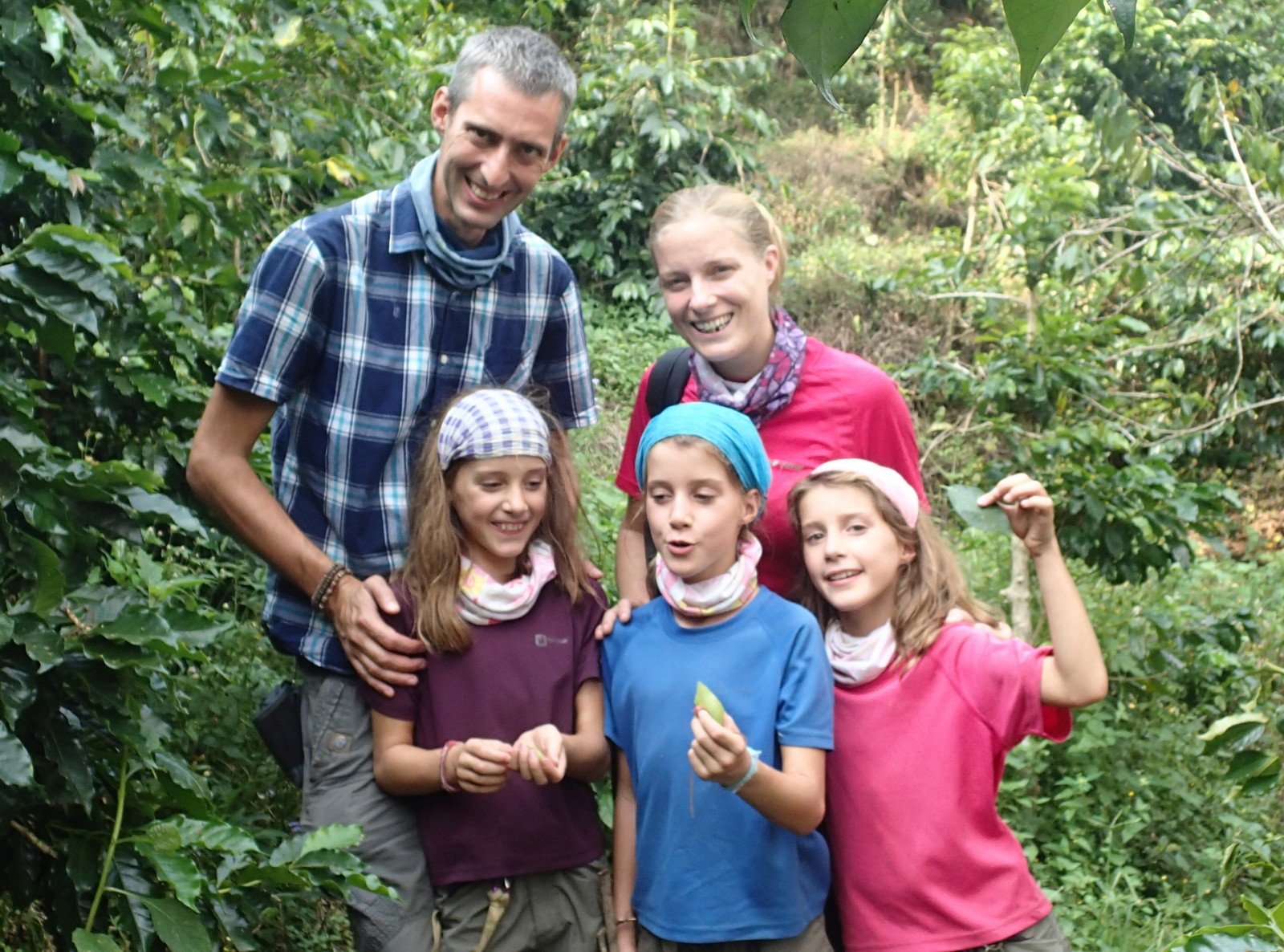
Say ‘Coffee’!
Finally enjoying the long sought cop of coffee on a plantation in Java
We got the chance to visit an Indonesian home yesterday. The circumstances could have been better, but it did restore my slightly shaken faith in the good people of this land; I have an underlying belief that most people are nice. And it seems that most people are. But not everyone.
We should have seen the warning signs really. But after 10 hours of train travel, the offer of a private minibus from the train station all the way to our remote mountain village (rather than going to the bus station and taking a public bus) seemed like a great offer. The price was pretty cheap, and there were some French tourists heading our way also using the minibus, so we clambered on.
The first sign was that we went to their office first, where we had to disembark and pay. Not too much of a worry. Then they tried to sell us various guided tours; but not too much of a worry given that this happens a lot around here. The real warning sign was the National Park Entry Ticket they tried to sell us for 217,000 IDR each (the guide book says it costs 2,450 IDR). They had a copy of one with a date stamp, which they showed to us several times to ‘prove’ how much the price had gone up. I knew that was a scam, but we explained we would buy our National Park Entry from the park rangers, and they accepted this. We knew they were trying it on, but thought that would be the end of it.
About 4km from our destination, the minibus stopped and the driver claimed this was the park boundary (we knew from the guidebook this was not true). He tried to collect the 217,000 IDR from all of us. We all refused to pay. There was much discussion, and the Indonesian driver became very angry and insistent that we pay. He told us he wouldn’t drive us the rest of the way. He was scaring us, we didn’t like the situation at all. So, we got off the minibus and walked.
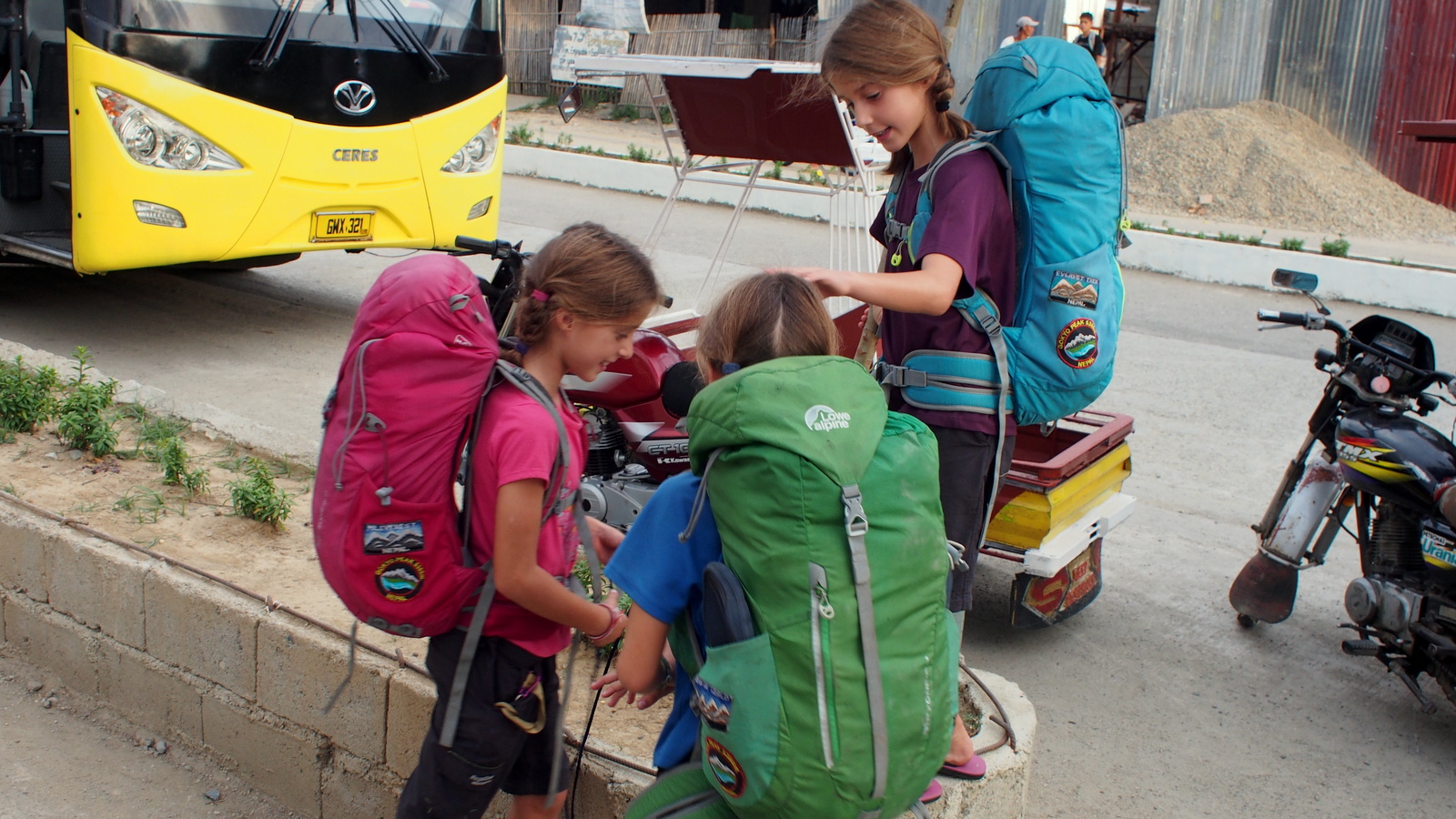
It was a grueling 4km. With a 20kg backpack each for me and Ferg, and the kids with a fair load each, we made slow progress up the seriously steep slopes in the dark. The kids did so well, no complaining, just one foot in front of the other, steadily gaining height. The Nepali training paid off. The stars were out and the mountains in shadow looked beautiful in the twilight. However, it was very hard work.
Eventually, after an hour, we stopped and sat down on our backpacks for some water and some peanuts. A family came out of a nearby house and asked us where we were heading. Neither our Bahasa Indonesia nor their English were enough for the full story, but they established that we were heading for Café Lava Hostel, it was dark and late, we had tired children and heavy bags, and they wanted to help us.
The man of the house took Ferg and a couple of bags on ahead to the hostel on his motorbike, while me and the children were shepherded inside for hot coffee, and offered some snacks. It was so lovely to be looked after by complete strangers, I found it very touching. The home was just a couple of rooms; the main front room containing a giant bed (that I suspect the whole family sleep on), a TV, a table, and stack of plastic chairs, which were laid out for us as visitors. The TV was showing what was clearly the Indonesian equivalent of the X Factor, and the family were sitting around with blankets around their shoulders (it’s cold up here in the mountains at night) drinking coffee, smoking the strange clove scented cigarettes that abound in Indonesia, and having what we would call in England a ‘Big Night In’! The house was very different to ours, the snacks and drinks completely different, but we were united by our appreciation of the X Factor and temporarily bonded over a pigeon English discussion of the merits of the various singers. What a lovely experience.
After several motorbike trips up and down the mountain, ferrying children, bags etc, we all arrived safely at our hostel. The kind man asked for no money, but we gave him some anyway. I am so glad that we met with this kindness to take away the bitter taste that the minibus driver left us with.
As we walked into the hostel, we met the French tourists from the minibus. It turns out that after a stand off, the driver eventually took them all to the destination, and the money was not paid. But hey, we had an experience on the way, and we felt safer walking. I would not have got back on his bus, who knows where he would have taken us. All’s well that ends well, and it’s public transport and meter taxis all the way for us in Indonesia from now on.
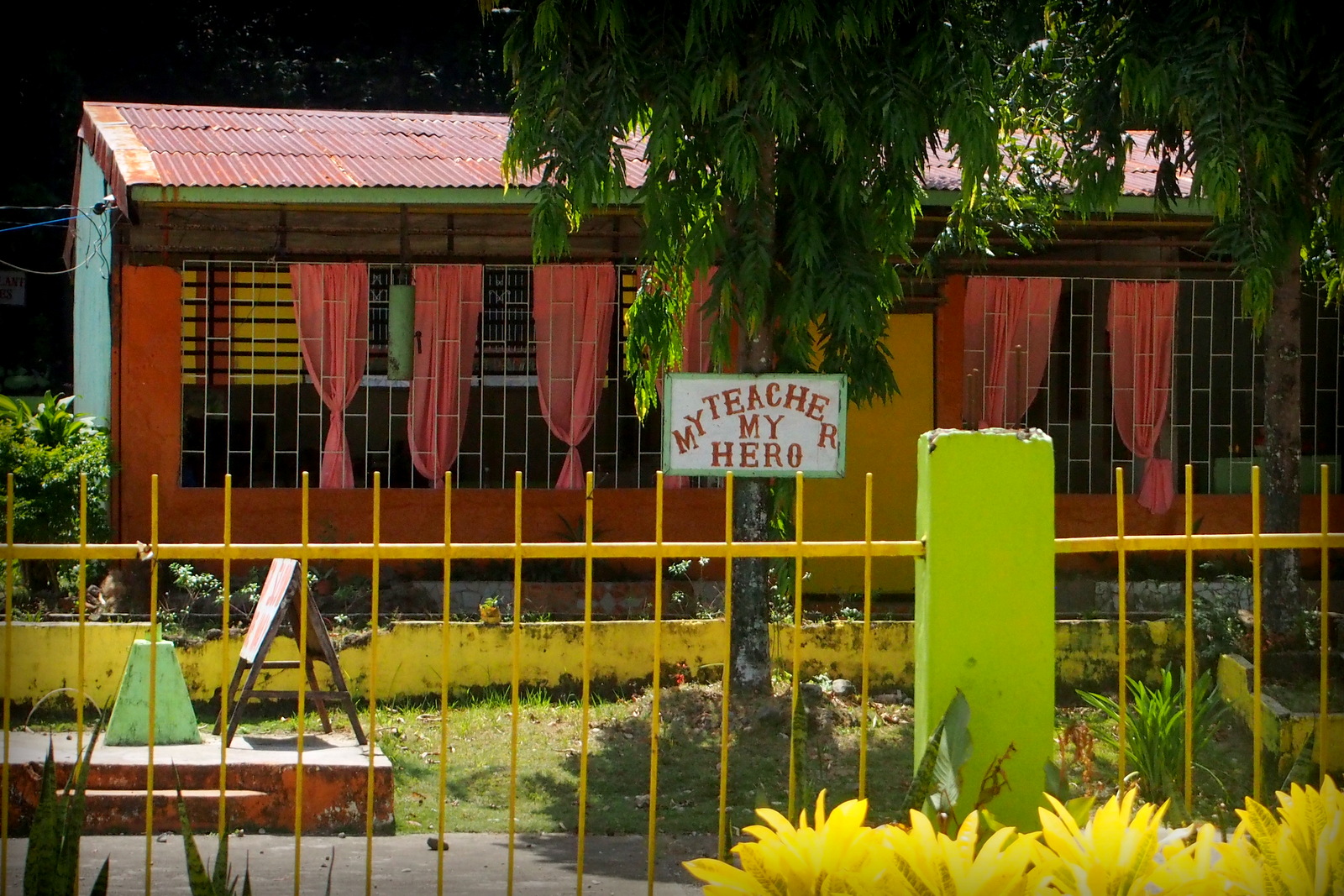
You spend a lot of time while travelling staring out of the window of your bus, train or other, less comfortable transportation, so when you see something written in English it’s a pleasant surprise. I always feel like it might give me some insight into the place I’m passing through.
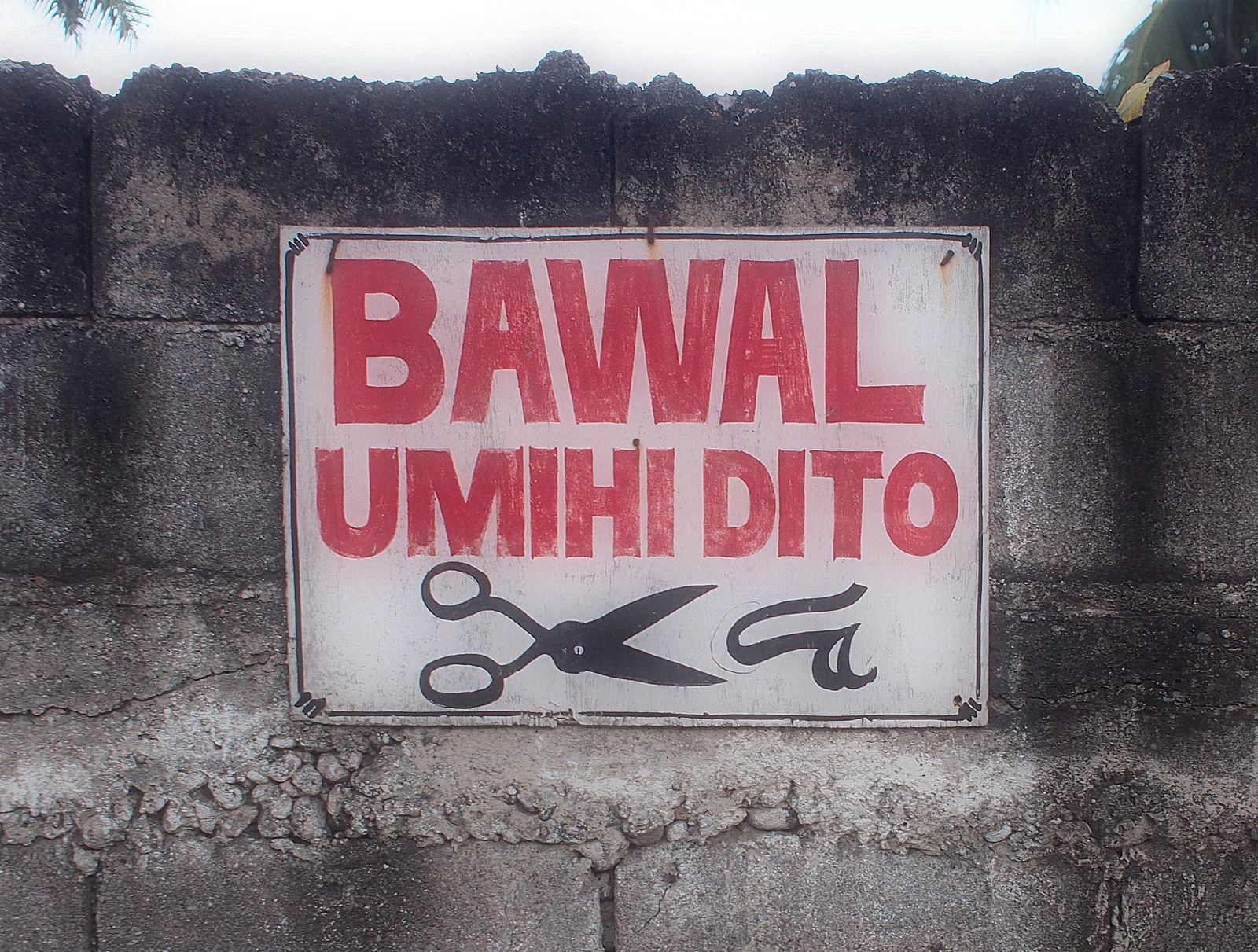
These three signs are all from the Philippines. I wonder what they reveal about the people who live there.
I saw this one outside a remote village school on Negros. Despite all the houses nearby being little more than ramshackle lean-tos ith ragged cloth or plastic sheeting for doors, the school was carefully painted, planted with shrubs, had cut grass and home-made, wooden toys in the schoolyard. Clearly someone had taken enormous pains to give the kids in that village somewhere pleasant to learn in. Then I saw the sign.
These signs were all along the road leading to a high school elsewhere on Negros. Clearly the locals are trying to keep drugs out of their school. And why let the truth stand in the way of a good cause.
This was on a wall in Dumaguete. I have no idea what the words mean. And I really hope that image next to the scissors is a pointing finger.
Planning ahead for our next country, Indonesia, has been on my mind for a while now. It’s a country I’ve been very much looking forward to from the moment I found out that we could walk up volcanoes there. It makes me feel like a little kid when I think how excited I will be to walk up a volcano. And what makes it even more fun is walking up one with 3 little kids!
As well as the volcano treks, there is an abundance of adventurous activities available to the backpacker who ventures into Indonesia. Of course, there’s Bali, but I think we’ll give it a miss seeing as we have seen so many wonderful beaches already. What really gets me excited is the chance to see some wildlife. There’s Komodo Dragons in their natural habitat. Plus there’s a remote but fairly famous Orang Utan Sanctuary in a National Park on the Indonesian southern side of Borneo where you can live on a boat for a few days and spot them in the wild.
Plus, of course, Fergus wants to do some more diving.
However, joining the dots between the best volcanoes, the komodo dragons, the orang utans and the legendary dive sites leaves us with a daunting set of journeys on our hands. The initial flight to Indonesia is already a complex set of 3 airplanes with fairly long waits between them spanning a 26 hour period, thanks to schedule changes by Air Asia. And we’re 2 days travel from the airport. There’s no information online for the local companies who sometimes operate flights between our chosen destinations, and the Lonely Planet bus and boat estimates are wearisomely pessimistic e.g. 36-48 hour boat journeys – and, I quote, “Don’t expect a cruise ship.” Hmmmm.
However, I am refreshed enough by our time in the Philippines to face the challenge head on and see it as all part of the fun. The ‘travelling’ part of travelling is sometimes the best bit. I’ve seen some amazing things out of the windows of our bus/boat/taxi/train/airplane/helicopter journeys. So it is with an optimistic outlook that we set off tomorrow on what promises to be an epic, but awe inspiring, trip to Indonesia.
I’ve been feeling a bit homesick lately. Sometimes it’s the little things I miss: fresh milk; cooking my own meals; sleeping in my own bed; and of course the luxury of having no insect bites (my family call me the mosquito early warning system). I also miss the big things: seeing my parents; seeing Ferg’s family; our network of friends and family who support us.
However, over the last week or so I have totally fallen in love with the Philippines, and right now I wouldn’t want to be anywhere else in the world but right here with my family.
How to describe the Philippines? After just 20 days, I’m not qualified. The country covers a vast area, and is made up of over seven thousand islands, of which we’ve managed to see only three. Even those remain stubbornly difficult to classify: mountains, volcanoes, beaches, rice paddies, lush green valleys. You name it; the Philippines has it. In the last 400 or so years, it’s been under Spanish and subsequently American rule, leaving a mixed legacy of thousands of beautiful churches, Christianity as the national religion, meatloaf on the menu, Graham’s cracker-based desserts, and perfectly spoken, USA-accented English.
It’s the people that have made the biggest impression. Everywhere we go we encounter big smiles, people waving and saying, “Hello!” and an endearingly polite, and yet somehow giggly, way of interacting with each other and with us tourists.
Water is a big part of daily life for a nation of islanders; it’s the only place we’ve been to where locals swimming in the sea outnumber tourists. The water is crystal clear; we thought we’d seen good beaches in Thailand but every single island here has it’s own deserted stretch of white sand, turquoise water and abundant coral reefs. And here, you get the beach to yourself.
The food is also a switch-change from the rest of South East Asia. Out with the chillies and fish sauce, no Little India or Chinatown meals here. It’s all about the BBQ chicken and the stewed meat. As long as you enjoy pork, you’re fine. In fact, I think they may be trying to compensate for the below-world-average consumption of pork in the surrounding Muslim nations. It’s delicious, but seriously fatty. The fish ‘sinigang’ (a kind of sour soup) makes a healthier choice, and the rotisserie chickens are divine.
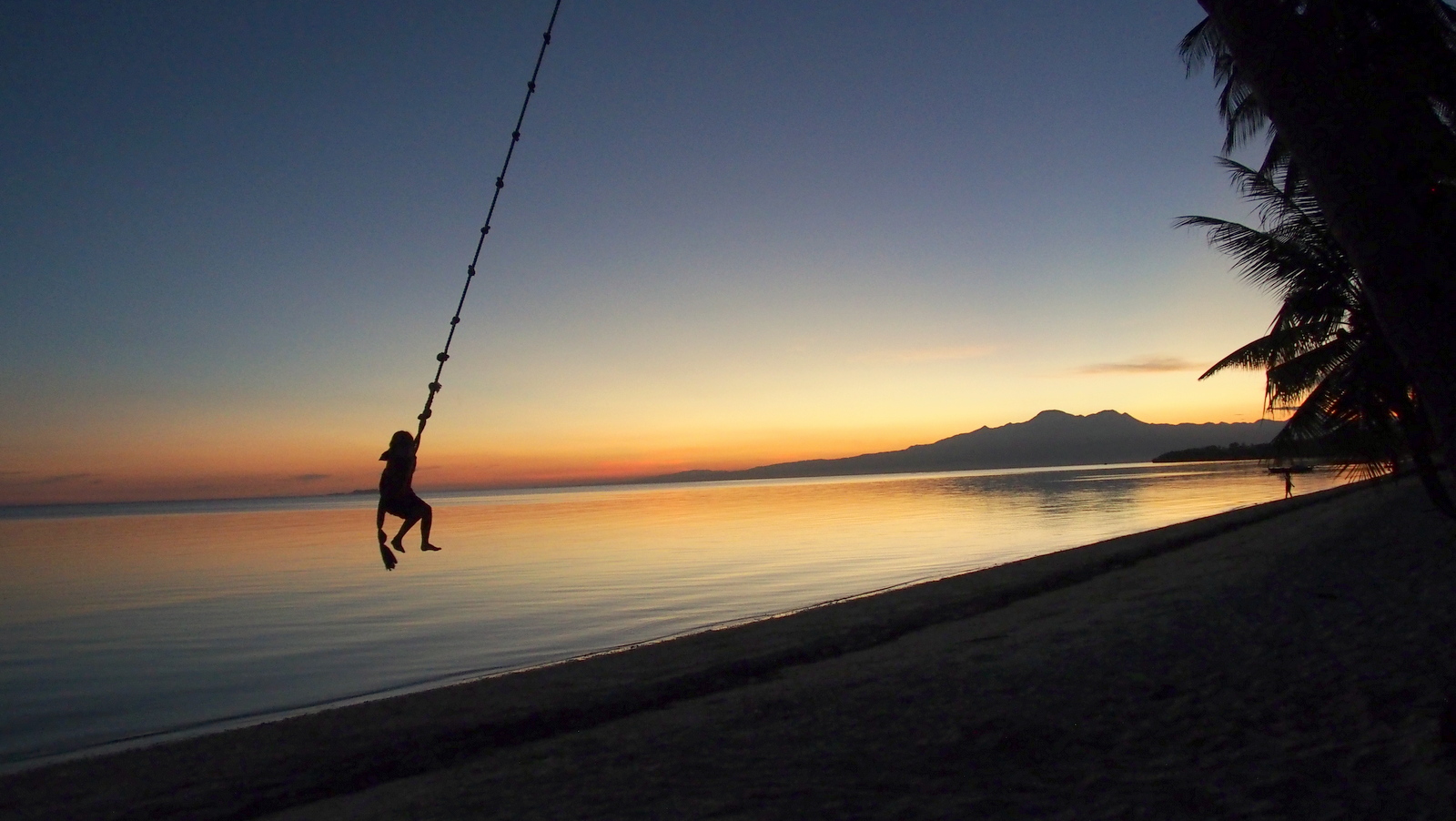
I’d challenge anyone not to fall in love with this place. With kids playing on the beach; locals swimming & fishing in the sea; all the smiling faces; the luscious countryside; outstanding trekking; historical buildings; relaxed dress code (women wear shorts and vest tops – hooray!); clear waters; brilliant diving & snorkeling; delicious food; some of the cheapest beer in the world; local rum that is cheaper than drinking water; all topped off with glorious sunshine and sunsets to remember forever, why would anyone ever want to go home?
After a long laze in Sipalay, we wanted to speed things up a bit, but – wow! – the last three days on Sequijor have been so incredibly full that I could fill a blog post about each, individually. However, it’s getting late and we’re packing up and moving on tomorrow so I guess I’ll just get it all down as best I can before my kids come running back from the coconut trees on the beach to tell me how starving they are and none of it gets written down at all.
Evie, Angering the Apirit of the Balete Tree
Spanish Bell-Tower, Sequijor Town
Old Church, Sequijor Town
Public Pool, St. Juan
Flavoured Milk at the Dairy
500-year Old Balete Tree
High Dive Successful at Salandoang
Splashing Around at Cambugahay Waterfalls
Cambugahay Waterfalls
St. Isadore Labradore Church
On our first day here on Sequijor, we decided to go exploring. Wandering up to the main road, we hailed a tricycle (a Philippine euphemism for a rattle-engined motorbike with equally rattley home-made sidecar) and asked the to take us round the island, stopping at the sights. It was awesome!
We visited a local park in St. Juan with a “swimming pool” (pond) where the girls swam. We stopped at some beautiful, 4-level waterfalls where we all swam, including swimming right under the falls into a hidden cave behind.
Then a coastal resort where they had built water slides and diving boards into towering cliffs over the sea. The slides were closed and partially collapsed, an unfortunate testament to ambition over realisation, but the diving boards were relatively stable-looking, so we climbed up and had a look over the edge. It was a long way down. The kind of long way that made the 10m board at the Leeds pool where our girls took diving lessons seem like jumping off a curb into a puddle. The kind of long way that would give a Mexican cliff diver second thoughts. So, of course, me and the girls all immediately jumped off.
In between, we stopped at old Spanish churches, little farming villages, a 500 year old balete tree said to be home to a powerful spirit (and which Evie climbed most of the way up when our backs were turned — no curses have yet made themselves apparent, though, so I’m guessing the spirit didn’t mind), a co-operative dairy selling real cheese and pasteurized milk (rare luxuries nowadays for us) and a few pretty view spots, eventually returning home exhausted, stimulated and still rattling from hours aboard our guide’s bone-shaking sidecar.
The next day we decided to climb a mountain. There’s only one here on Sequijor (called Mt. Bandilaan) and details on reaching the top (both on the web and our guidebooks) were kind of sketchy so weren’t entirely sure what to expect or even how to get there.
In the end, it was a very easy walk. There was a narrow paved road all the way to the top. The greatest difficulty, in fact, was convincing the various Filipinos we met along the way that we actually wanted to walk. No-one could understand why we wouldn’t use a vehicle when we could afford one.
We did get a bit lost trying to find the path to the actual summit (the road only passes nearby) but when we eventually found it, the 360° view around the island was gorgeous.
Setting off up Mt. Bandilaan
Janet at Mt. Bandilaan
Fergus on Mt. Bandilaan
Walking Back Down Mt. Bandilaan
Scarlett is Suspicious About Sea Urchin Pasta
On the way down, our trike driver came and met us near the top. Once more, it took quite a lot of explaining to get across the idea that we wanted him to go back and wait for us halfway up the mountain. As he drove away, he shot us the most astonished and puzzled look I’ve seen since telling a porter in Nepal that we wanted to carry our own bags.
As the mountain had proved so easy to conquer, we decided to spend the afternoon swimming in the sea. Under “suggested places for snorkeling” in our Lonely Planet, it said “strap on your mask and fins and dive in anywhere”. So that’s what we did. Swimming out from our resort (the lovely but only-just-within-our-price-range Villa Marmarine) we saw sea grass, hard corals, tropical fish, lots of sea urchins and generally had fun splashing around in the astonishingly clear, turquoise water. Me and Jem even swam right out to a bangka moored in deeper water where we could free dive down to even more impressive reefs.
For tea we got our own back on the trepidation that all the sea urchins had given us while swimming by ordering sea urchin spaghetti from the menu. Revenge, it turns out, is surprisingly tasty.
Day three. I wanted to do a dive trip and as there was no-one else at our resort who was a diver, we were able to hire the entire boat to ourselves. I would dive while Janet and the girls snorkeled.
I wasn’t sure whether to believe the guy at our resort when he said the local marine sanctuary (Tulapos) was just as impressive as Apo Island (a famous marine sanctuary 15km from here) but it was probably the best dive I have yet done. The soft and hard corals, rainbows of fish (too many to mention), sea snakes (yes, another banded krait but this time as big as a python), gigantic lobsters and surreal nudibranches alone they would have been enough to make for an amazing dive. But while under, I swam with not one but two massive sea turtles, fulfilling a diving ambition I’ve had since I learned at New Year.
After returning, as I still had plenty of air left in my tank, and the dive boat was moored in very shallow water, I gave Jemima and Scarlett an impromptu SCUBA lesson, giving them my secondary air source and sinking down to the sea floor to explore. They loved it.
All that alone would have made for a memorable day’s diving but on the way home something even more astonishing happened: a huge school of dolphins appeared near our boat, then, when the crew started clapping and thumping the deck, swam over and raced alongside us, leaping, twisting, diving, pairing off, skimming the surface… And all the while, the long, flat-decked nose of the bangka meant we could stand right out over the water, surrounded by dolphins playing on three sides. It was magical, and, according to the crew, incredibly rare in the waters around Sequijor.
Whew! Three days of intense and thrilling experiences and I feel both awed and exhausted. Tomorrow we move to a new resort with a pool. I wouldn’t be too surprised if we ended up being less ambitious and just spend the day recovering at the poolside.
Tomorrow, we move on again. But for a change, it’s after a (for us) long pause in one place. We’ve been here at Sugar Beach, near Sipalay, for a whole week, after deciding that our girls would benefit from slowing down for a while.
Whenever we ask them where they’ve like best, all three girls invariably name the places where we’ve stayed the longest – Chitwan, Savannakhet, Ko Tarutao – even though their favourite experiences aren’t necessarily from these place at all. I think they just like these moments of stability where they can get to know somewhere and feel like they’ve got a home from home.
After racing though Malaysia, never stopping more than three nights anywhere and dashing around Singapore for six very packed days, we decided to head to our girls’ top type of location: the beach.
Unlike most beaches in the Philippines, Sugar Beach is good for swimming (others tend to be too corally, too rocky, too tidey or too sea urchiny), it has nice, wide sand and lots of Western-run places to serve up the kind of comfort foods our kids love (spag bol, sandwiches, pizza, bacon and eggs, fried rice, French fries) but at the same time is remote enough to feel off the beaten track and for the resorts to be idiosyncratically-small scale enough for me and Janet not to feel like we’re in a tourist trap.
Each day here has consisted of little more than trying to ensure our kids at least brush hair and teeth before letting them run off to swim, pet the resorts’ dogs, dig in the sand, climb coconut trees and make friends with the staff, then, later, trying to round them up to scrub the salt, dog and sand off them (and patch up coconut tree grazes) in time to eat. They’ve loved it.
The other thing that we’ve noticed makes them happy is routine. Too much idleness and there’s a noticeable increase in bickering and boredom. So staying still was also an opportunity for homeschool. In between running wild, we’ve been corralling our girls and working on more maths or letting them carry on with long-form stories they’ve been writing since Nepal (after 2 draughts, we’re finally onto writing them up).
Towards the end of the week, however, while the kids were now ecstatic, me and Janet had begun to get restless. Particularly Janet, who I sensed had maybe had enough lazing around on the sand when she screamed, “Aaargh! I want to climb a mountain!” over breakfast, There weren’t any mountains. But we did walk over the nearest hill that afternoon to snorkel in a remote, uninhabited bay.
In fact, we got rather lost going up the “mountain’, a wrong turning taking us into a rather smelly section of forest we realized rather too late served as the village toilet. We got to the bay eventually though and had a magical time. The bay was coated in sea grass so felt like flying over a strange, otherworldy moor; a moor dotted with enormous, brown starfish and inhabited by beautiful but highly poisonous banded krait sea snakes, sliding sinuously through the “air”. We swam right up to them, marvelling at their elegance and thrilled by the danger.
Mermaids?
Sea Grass
Banded Krait
Some Kind of Star Fish
I guess travelling as a family requires a lot more compromise than travelling alone or as a couple. Just like normal life with a family does. Janet likes seeing sights best, the girls like getting to know one place and my favourite part is the actual adventure of trying to get around, not knowing how it will turn out. Although, to be fair, we all enjoy all of these things to lesser extents. And, of course, we all enjoy eating our way around the World.
So, while all three girls seem rejuvenated by our time on Sugar Beach, it’s time to move on now. It’s been good for them to get a little R&R. After all, we’ve been on the road for a long time and our next destination is Indonesia, which everyone warns us is exceedingly hard work.
But tomorrow we’re leaving. We’ll be spending the next seven days on another Visayan island: Sequijor. And this time we plan to be much more active. There’s old Spanish colonial buildings to visit, waterfalls, caves, coral reefs, even a mountain (well, a big hill). And the whole place has a spooky reputation as the home to witch doctors.








 Travels with Triplets