Goodbye Indonesia

And we’re off! After 24 days, we are now on our final epic journey through Indonesia, this time with the final destination being Jakarta for a flight to Ho Chi Minh City. Of course, this being Indonesia, it’s 5 days from setting off to arriving. First there’s the 7 hour ferry (plus the 2 hours you have to wait on it until it sets off); then the 2 hours crammed onto a tin can (i.e. bus); a layover in a transit town called Bima (possibly our least favorite place in SE Asia so far); an airport hotel called ‘Aerotel’ (sound inviting?); another early morning flight to Jakarta; then a stopover in a very nice looking hotel, described on Trip Advisor as ‘the best layover hotel ever’ (swimming pool, gym, sauna…on the edge of our budget, but we’ll deserve a treat by then); then another early morning flight to Singapore, where we have a 4 hour wait (yay – we love Singapore airport, it has shops from home in it! Last time we were there we had a cheese scone, it was sublime); then our final flight to HCMC. Where our only plan is to meet an old friend (Hi Scott) and stay still for a while. Very still.

We are currently sitting in Bima airport, which is just outside Bima town centre, both of which I feel deserve a special mention. Described by the Lonely Planet as ‘the hard sell olympics’ and ‘no one’s favorite getaway’, it’s an experience here. The moment we disembarked the tin can bus, we were surrounded by throngs of men trying to sell bus tickets and women grabbing at the children and saying, “tumbar tiga!” (triplets). No different to many other places except in the intensity and ferocity of the intrusiveness of these people. They step in between us as we try to speak to each other, pull our kids in different directions and follow us as we try to make a getaway. This culminated in my first shouting match with a bus ticket tout. Screaming, “Go away!” repeatedly in his face kept him off us for at least 3 minutes. Bima is the destination of choice if you fancy dodgy food, being overcharged or a grotty hotel. I’m glad to be leaving, and even more glad that we are now at the airport waiting for a flight and not at the bus terminal waiting for the 14 hour bus (travelling with children 1 way on the 14 hour bus was enough).

Which brings me to Bima airport; we decided to get here early as we’d not had chance to reconfirm our flights, and really can’t afford to be ‘bumped’ (common practice is to oversell the tickets here) as we have so many connections. Now, I would once have described Stanstead airport in London as having ‘nothing there’. However, Bima I think is the most devoid-of-anything-to-do airport I’ve ever seen in my life. When we arrived one small shop was open selling crisps, biscuits and soft drinks. There were 2 security grilles for neighbouring shops. A second shop opened for business. This one sells crisps, biscuits and soft drinks. A few minutes later, the third and final shop opened. This one sells crisps, biscuits and soft drinks. And, brilliantly, “I Love Bima” T-Shirts. But it’s all good because we’re not on the bus.

Indonesia has been a country of highs and lows for me. I’ve peered into the smoking cone of a volcano; seen the world’s most sulphurs lake; braved the world’s most active volcano; spent time deep in the jungle with orangutans; walked through isolated forests with Komodo dragons; seen coral reefs that could put a BBC documentary to shame; ticked off manta ray, octopus and megapod on my list of wild animals seen; and marvelled at some astonishingly beautiful scenery along the way. But I’ve also inhaled the sickening passive smoke of too many clove cigarettes; sat on too many long bumpy buses and been harassed and bothered too many times to make me really want to come back here. If I ever do, it will be with a targeted itinerary with flights factored into the budget. Flashpacker next time, not backpacker!

Komodo Dragon Hunt

They always watch the children. Fourteen years ago, here, they got one child. He had been helping his father on his fishing boat then he went home and asked his mother for some money to buy sweets. She told him, “no”, so he went off into the forest and found a fruit tree. He ate and ate. But the fruit was not ripe yet and it gave him stomachache so he pulled down his trousers and began to poo.

But he didn’t notice the dragon behind him. It leaped from the bushes and bit him on the bottom. They have teeth like razors and slice off flesh.

Two other children heard his screams and came running but were too frightened of the dragon to help. Instead they ran back to the village. When the villagers came, the boy was gone but they followed the blood spattered on the bushes and grass. The dragon was carrying him away, still alive.

Some of the villagers beat at the dragon with sticks but it would not let go. Then some men grabbed the child by the arm and pulled him away and they ran, ran, ran back towards the village. But the dragon chased them. It grabbed the boy again, this time by the stomach and as the villagers tried to pull him away, it ripped him open in their arms.

He died thirty minutes later in his mother’s arms. He was only seven.

Our guide looked round at us, clearly pleased with his anecdote. Janet was wide-eyed and pale. I could feel the incredulity spreading across my face. In what way was it possibly a good idea to tell this story to a family containing three already-nervous children?

“What was that story about?” asked Scarlett. Thank goodness. She hadn’t been able to penetrate the guide’s thick accent.

“I’ll tell you later,” I assured her, rather hoping she’d forget to ask.

I really didn’t want to repeat the story, standing, as we were, in a remote forest clearing on Komodo island, out hunting for the largest lizards in the World. We knew already, of course, that komodo dragons could be dangerous, how their mouths are filled with over 50 types of bacteria so even a small bite is fatal, and how, as they’re a protected species, the guides who take tourists out looking for them are allowed only a forked stick with which to defend themselves and their charges. But out in the forest, several hours from the small ranger station we’d set off trekking from, it all seemed a lot more real.

I suddenly wished I had even a forked stick.

“How do you use the stick?” I’d asked the guide back at the station. His reply had not been encouraging: “We push it away. But better to run away. But dragons are fast. Up to 20 kilometres per hour. And they can jump, so not easy to climb tree. And swim very fast. But don’t run until I say or they will chase. Especially children.”

I searched the bushes around us with my eyes. We’d seen two dragons already and their camouflage and the fact that they stand completely motionless makes them almost invisible in the dry scrub of the forest. I made sure my kids were very close by and continued to catalogue which nearby trees looked climbable. One hour of trekking down, only two more to go.

He’d been right about them watching the children, too. The dragons we’d seen had stared at them, impassive, like looking at so much meat.

“If you go up this path,” the guide went on, oblivious, “you get to Padang Valley. There a Swiss tourist – Baron Rudolf von Reding– went missing. He was at the back of a group and stopped to take photos. They didn’t realise he hadn’t caught up with the group until they reached the boat many hours later. There was only a guide at the front, you see…” And he set off into the jungle.

The Neverending Journey

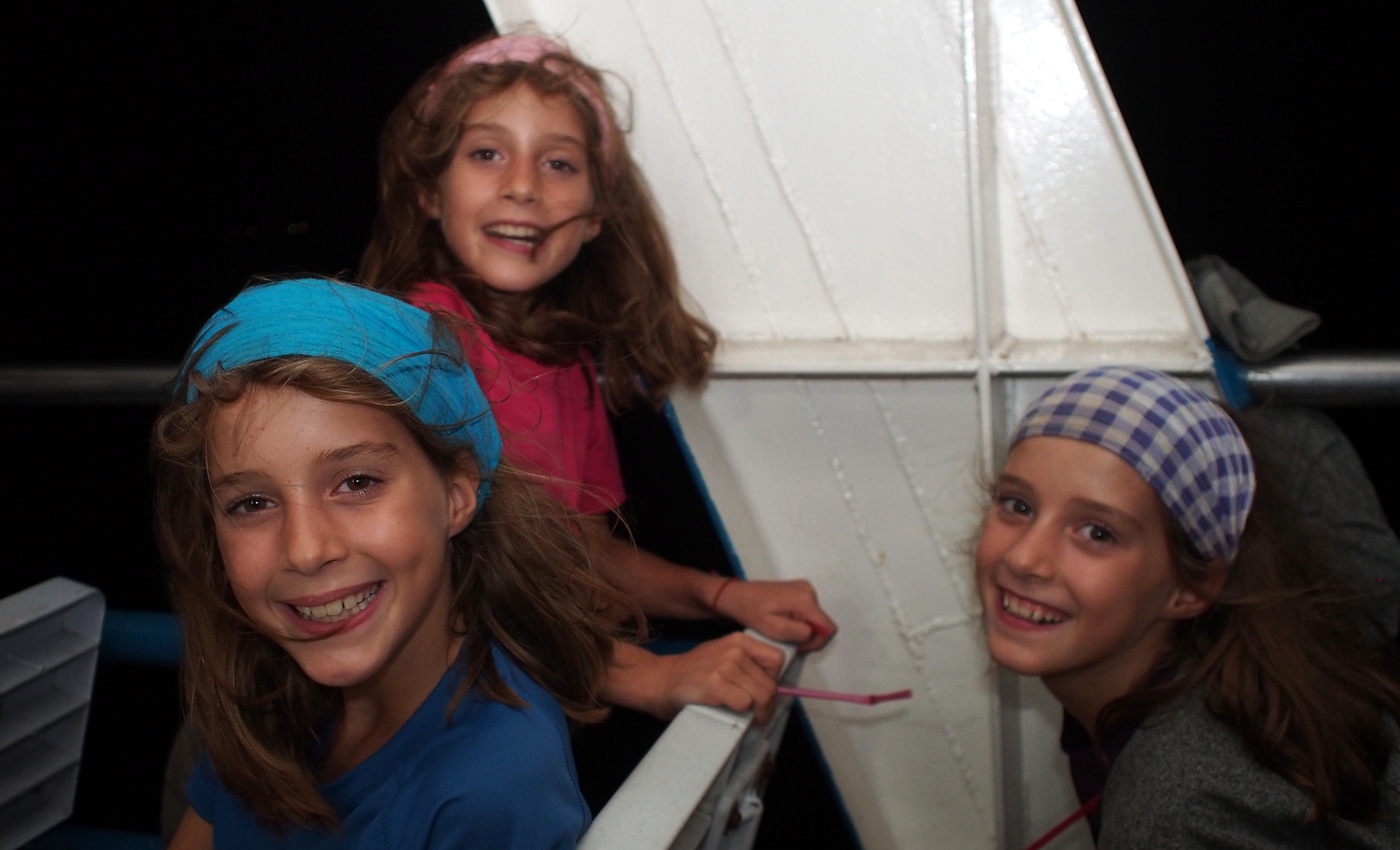
Picture the scene. It’s Sunday morning, we’ve not slept properly since Thursday night. We’ve been travelling for 3 days, and are on the final leg of our journey, a 7-hour ferry. Only we’ve been on it for 2 hours and it’s not set off yet.

There are chickens flying around the boat, which have just been recaptured by their owners, and there’s a group of about 12 kids crowding around our children pointing, laughing, and generally gawping at the on board entertainment (the existence of triplets).

The endurance test began with a couple of flights, then a long taxi ride and some haggling over bus fares, so fierce that even Fergus got into a shouting match. After a very short nights sleep in a truly disgusting hole of a hotel, we set off on our 14-hour bus journey (I kid you not). The bus was packed, people on stools all down the aisle, chickens, luggage and men smoking everywhere. The smell from the strange Indonesian clove-scented cigarettes is sickening; I thought I was going to throw up most of the way. Thankfully, the girls all dropped off, but sadly it coincided with us all having to exit the bus to go on our first ferry.

Two hours later, after an on board captive-audience toy sales pitch set in a fog of cigarette smoke, we clamboured back onto the bus, when Scarlett’s seat broke. It did provide some entertainment as it swung back further than the full recline position, so she was effectively lying on the lap of the lady behind her. Futile attempts by the bus conductor to repair it with some string continued the entertainment; in the end we were in luck and someone got off the bus so she could swap seats.

The girls all managed to get back to sleep, only to be turfed off the bus again for the complimentary lunch. Now, I’m not a fussy eater, as anyone will tell you, and I’ll try anything once. But there was something about the luke-warm vat of fish-head curry, left lying in the sun for hours, that just didn’t appeal somehow. We bought ice lollies. The only other food we’ve had en route is a pot noodle, some deep fried seaweed and a few biscuits, plus a few chewy mint sweets a nice Indonesian lady gave our children. There have been a few eaterys along the way, but you know when you senses scream food poisoning? Spontaneous 3 day fast.

It was the last 6 hours or so that were the worst. I was just daydreaming and looking out of the window, lost in Adele’s greatest hits on my ipod shuffle, when the terrible thing happened. My ears physically recoiled as the on-board sound system spluttered into life, booming Indonesian pop hits at full volume, making even listening to music through headphones impossible. This woke up everyone on the bus (most of whom had been sleeping); then TV screens were pulled down from the ceiling with karoke-style words on so you could sing along. Thankfully, no one did. I’m not quite sure what planet the driver was on at this point. I guess he must have been thinking, “I know what this bus of overtired, frazzled, grateful-to-be sleeping people need; some high energy, high volume music to wake everyone up and rattle their nerves to breaking point.”

I thought about getting off, but that wouldn’t have helped. Miles from anywhere, I’d only have to find another bus, which would be the same. Possibly worse. I thought about crying. That wouldn’t help either. I thought about the poor children, who seemed to be dealing with it better than me. So I smiled, looked out of the window, and tried to daydream through the cacophony. We were bound to arrive eventually.

Eventually arrived rather sooner than expected. Around 2 hours from our final destination, we were told the bus goes no further, and we have to change busses. Odd, as we’d bought a direct ticket, but never mind. We were ushered to our new bus, a small, ancient tin can, pitch black with no driver. Luckily, there was one guy who spoke great English, who explained that we were welcome to sleep on the bus, and it would be setting off to our final destination at 5am. It was 9pm. So much for direct. He was very helpful though, and showed us a to nearby hotel, where we took their top priced ‘VIP room’ (£9) and were treated to a reasonably clean, not too damp resting place, where we snatched 6 hours sleep.

The 4.30 alarm was a killer, but we made it onto the bus by 5am. It set off at 6am. We were still in plenty of time for the ferry though, as it was suppose to set off at 8am, but set off at 10am. At least we have seats on the boat, and the TV is on but actually muted with subtitles (this is a first). We’ve seen some World Cup qualifier highlights, and are now 10 mins into Pretty Woman. All good so far. Here’s to hoping that the karaoke isn’t about to start up.

It was always going to be a tough one. We were pretty tired after clocking up the kilometers in Java, followed swiftly by a flight up to Borneo for our boat trip, which was spectacular but remote. In fact, we called a family discussion to decide if the journey from the heart of the jungle to the island of Komodo was worth it. I think we were all tempted to check into one of the great value 5 star hotels in Java and hole up for a week instead. But where’s the fun in that? And surprisingly, it was the girls who persuaded us to take this once in a lifetime chance to see the Komodo dragons.

It didn’t help that we deliberated so long over the price of flying a huge chunk of the journey, that when we finally decided to fly, the flights had sold out. And that the bus turned out to be quite a lot more than the guidebook suggested, despite shopping around and haggling (which did almost halve the first quote), but even so our 3 days of torture have saved us the princely sum of £90. If there’s a flight back, we’re on it, whatever the price!

We look a motley crew as we make the final leg of this epic journey. In fact, we sat down for a coffee & the café owner brought out a comb for the children. The town of Labuan Bajo looms on the horizon, where the Lonely Planet promises a café called The Lounge that sells ‘home comfort food, think burgers that need 2 hands, fish & chips…’. Now that’s something to look forward to. And there’s beer available as it’s a predominately Catholic corner of Indonesia; we’ve seen nothing but Biltang Zero (a no-alcohol beer) for a couple of weeks.

We should be able to afford the luxury of staying still for 3 whole days, our longest stay in Indonesia, before taking a 2-day trip to Komodo from Labuan Bajo. The dragons are something I’ve been longing to see for years, so I’m sure the horror of this journey will melt away once we arrive and prepare for the trip.

However, we then have to get back again…!

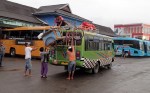
Waiting for a taxi to the airport in Pankalan Bun, Borneo

Waiting for a taxi to the airport in Pankalan Bun, Borneo

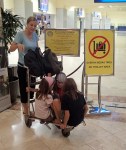
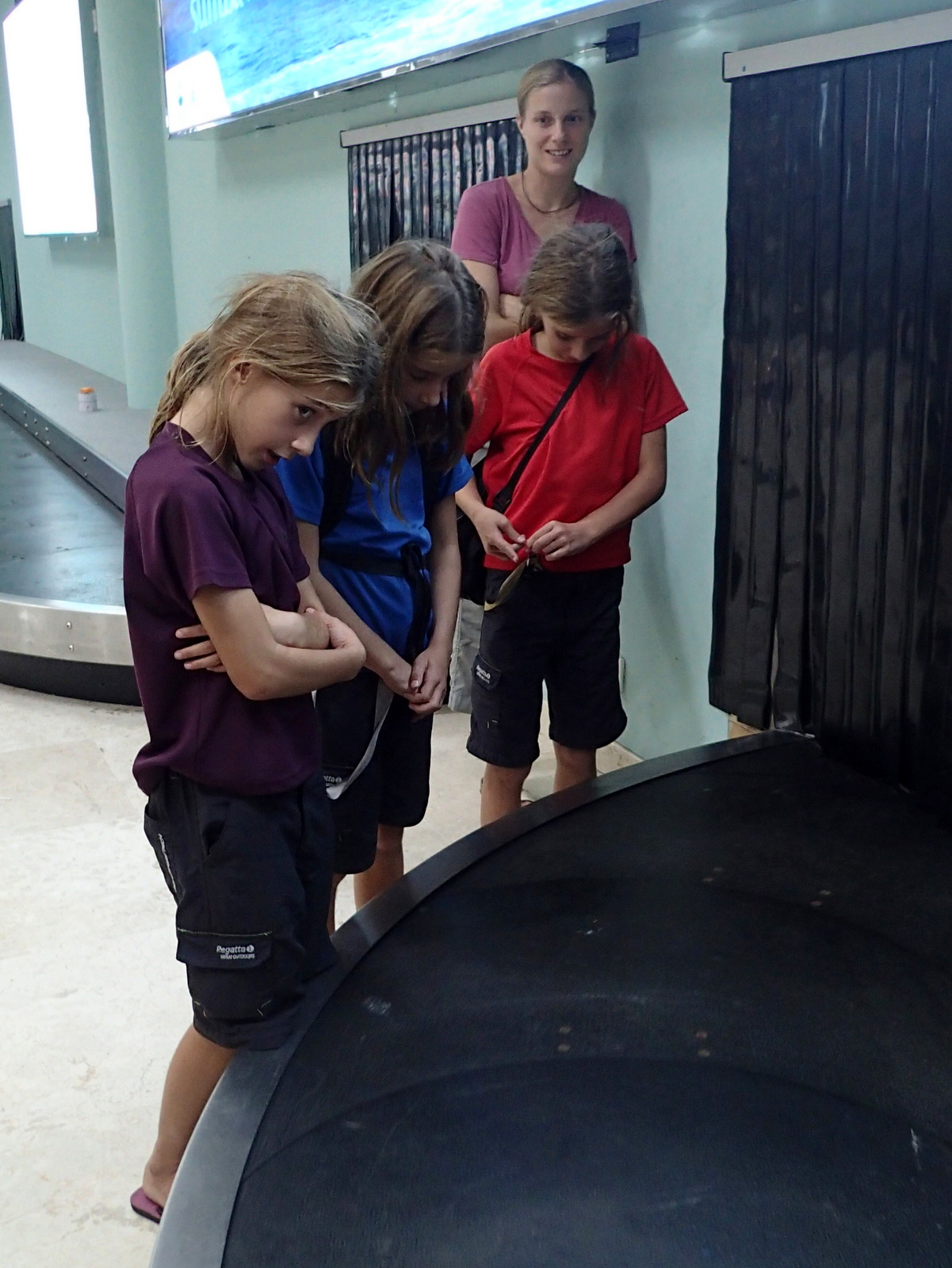
Collecting our bags at Surabaya airport between connections

Collecting our bags at Surabaya airport between connections

Walking to the ferry with "dodobears" in Sape, Sumbawa

Walking to the ferry with “dodobears” in Sape, Sumbawa

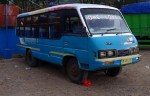
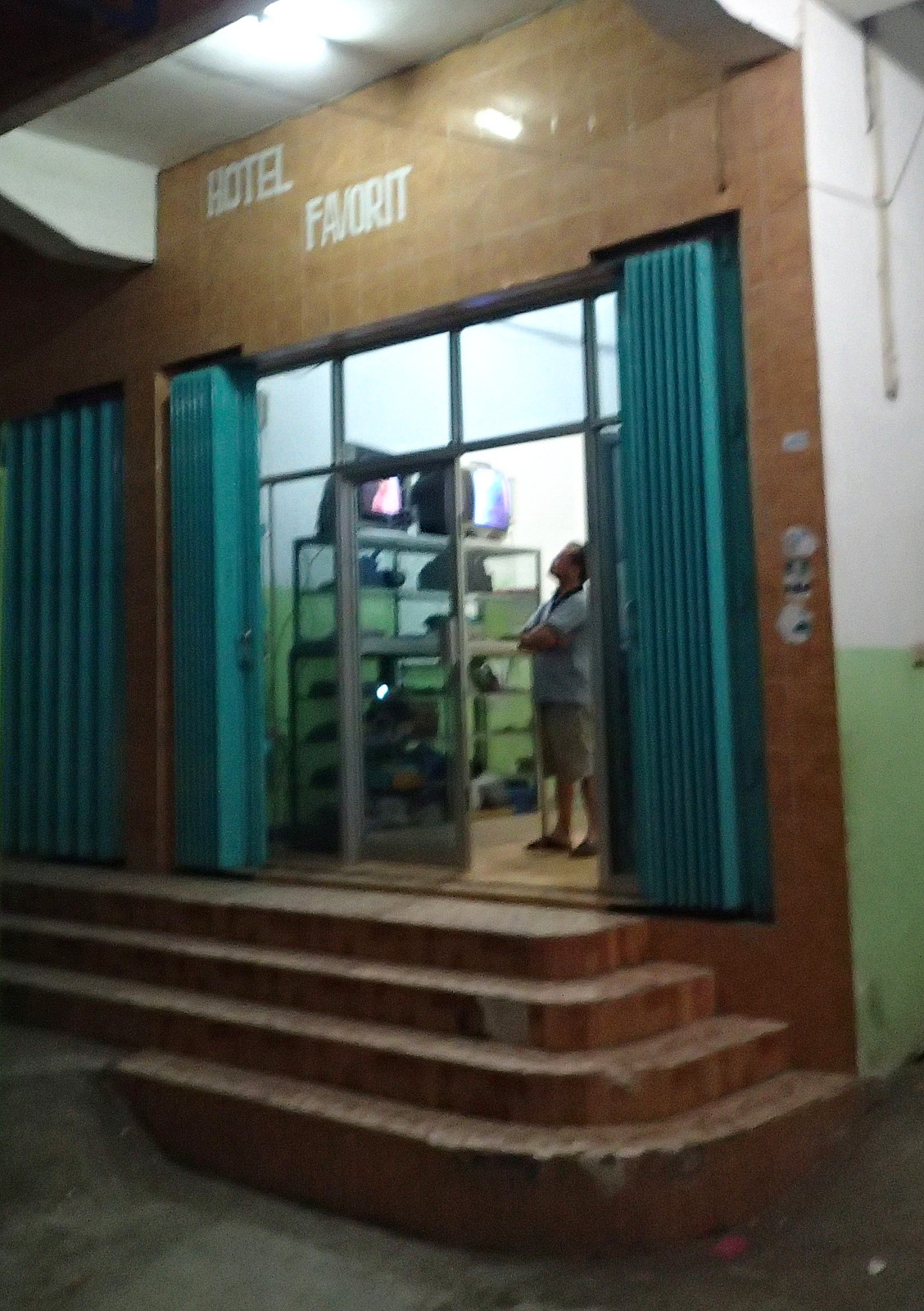
Favorit by name... but not our favourite by any stretch.

Favorit by name… but not our favourite by any stretch.

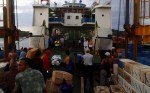
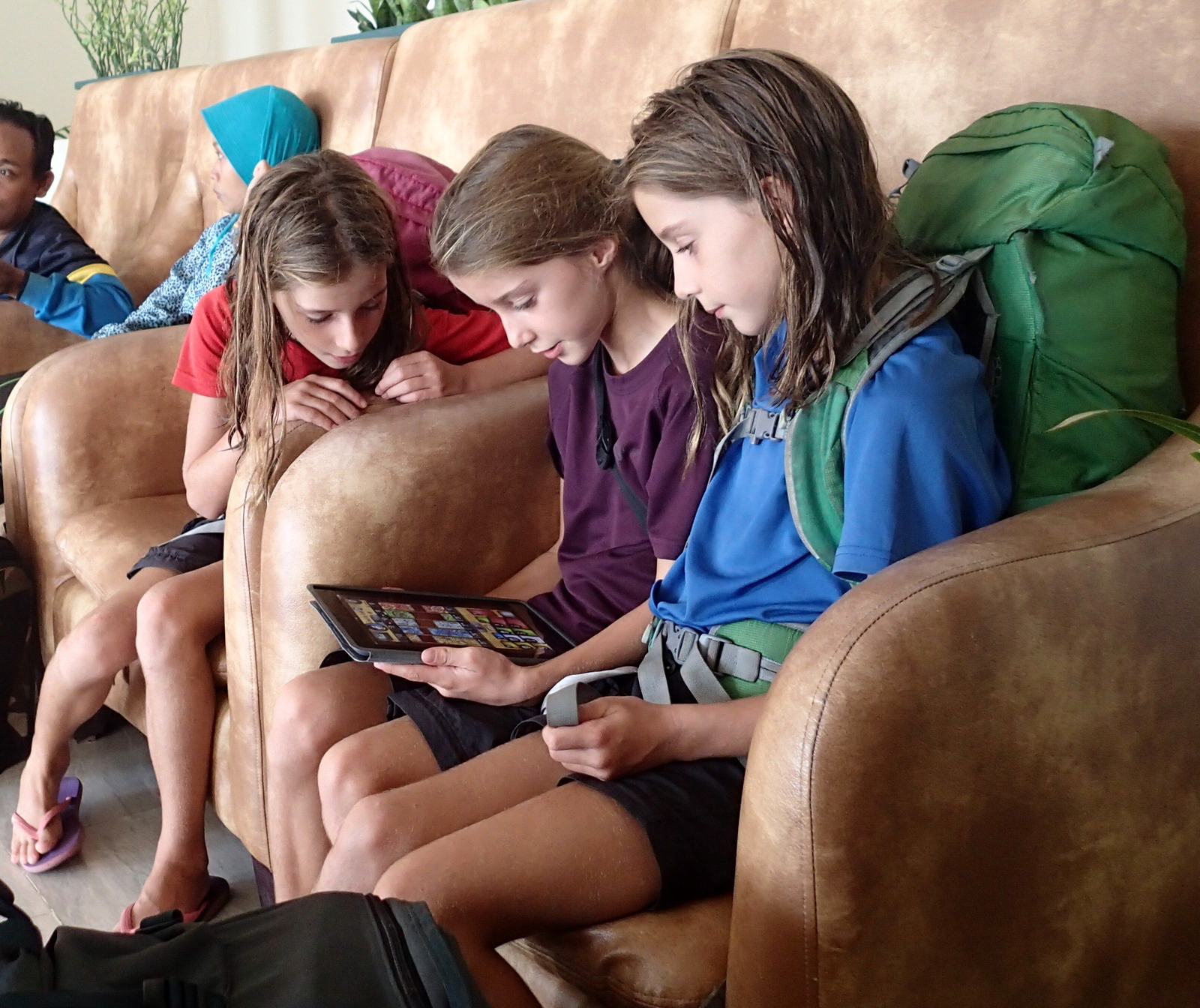
Passing the time with some light programming during our 7-hour ferry crossing to Flores

Passing the time with some light programming during our 7-hour ferry crossing to Flores

Nearly there!

Nearly there!

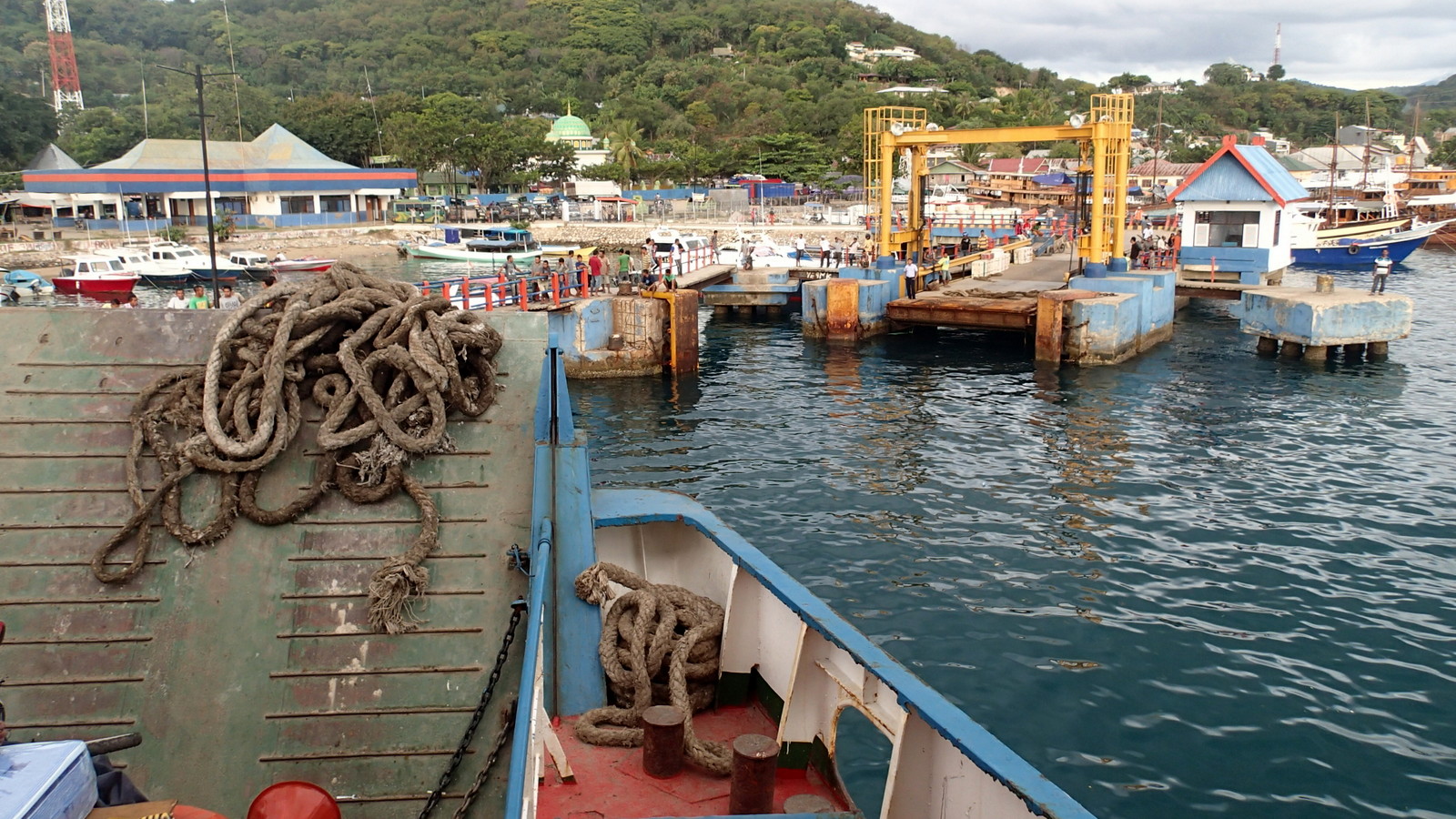
We're there! Pulling into Labuan Bajo harbour, Flores. We've made it!

We’re there! Pulling into Labuan Bajo harbour, Flores. We’ve made it!

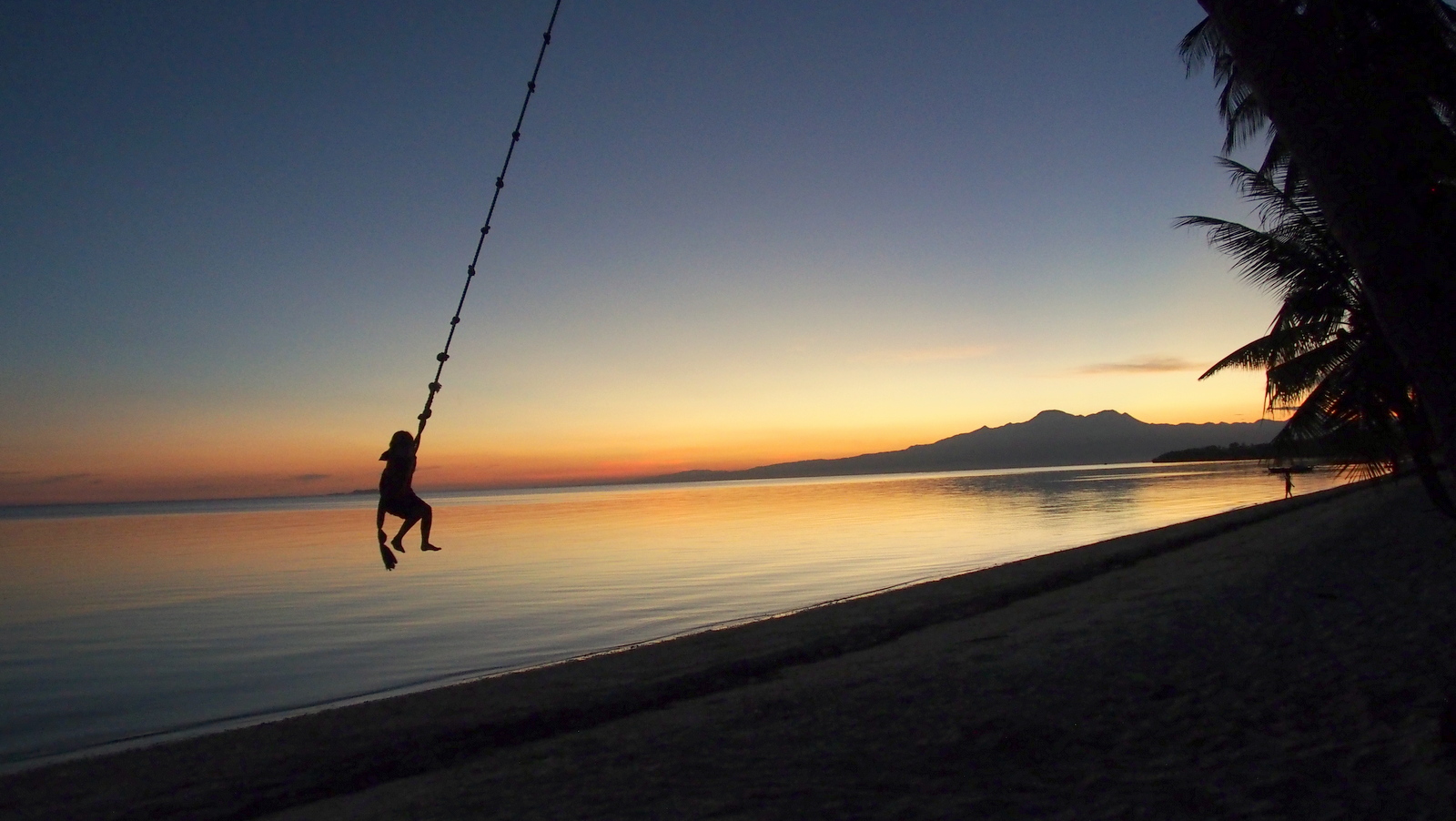
The famously-beautiful Flores sunset. Best enjoyed with a very well-earned beer.

The famously-beautiful Flores sunset. Best enjoyed with a very well-earned beer.

800 Kilometers, 6 Busses, 5 Days, 3 Volcanoes, 2 Trains and 1 Temple

It’s been quite a trip through Java. Braving daunting distances on rickety old busses, we’ve covered a serious amount of ground. We’ve travelled alongside chickens, with our bags piled on top of us, feet inside a market trader’s basket due to lack of space on the bus. But we made it, and were rewarded for our endurance by some truly once-in-a-lifetime experiences.

Merapi was our first stop, where we groaned our way out of bed at 3am for a sunrise hike in the hills. Merapi is the most active volcano in the world, having had a full-scale explosion in 2010, the damage from which can still be seen in the landscape. The surrounding area has new forest growing amid the scorched remains of huge old trees, with lava trails hardened into new riverbeds.

This slideshow requires JavaScript.

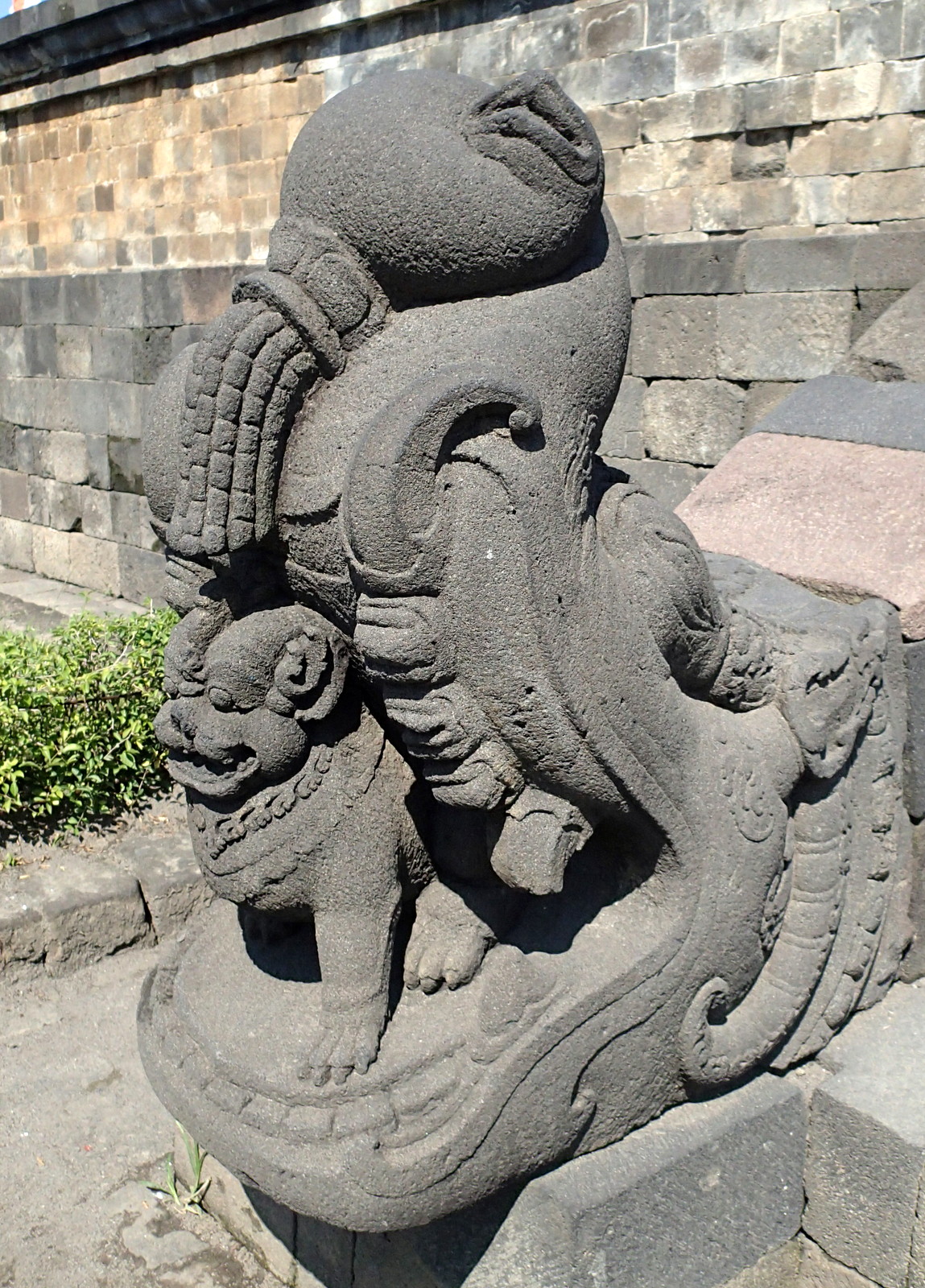
Next stop was Borobudur. It’s a huge, 1400 year old Buddhist temple that was overgrown by forest for circa 1000 years until it was rediscovered in the 19th Century by the famous Sir Raffles. The loving detail carved into each stone coupled with the beautiful landscape make an awe inspiring scene. My personal highlight is the tale of how historians have studied the boats depicted in the stone carvings. Doubts about the ancient Indonesians’ ability to sail to Africa had to be cast aside when they actually sailed a full-scale copy all the way to Madagascar.

Outside the temple of Borobudur

Outside the temple of Borobudur

One of the thousands of carvings in the stones

One of the thousands of carvings in the stones

Bromo was our next destination. Rising from a bed of volcanic ash, the lunar-like slopes of Bromo and its neighboring peaks are a photographers dream. It’s a shame Ferg’s SLR camera chose this moment to stop working. (And lucky we have a half-decent pocket camera too). It was my first chance to climb to the rim of a volcano’s crater and peer inside its mouth. With sulphurous gas swirling constantly from the centre I found it terrifying to be so close to such a natural wonder, and felt very far from home.

This slideshow requires JavaScript.

We were unsure if it would be worth the journey to see another volcano at Ijen. It involved 7 hours on the worst quality bus we’ve seen so far (quite a claim) plus a further 3 hours in a jeep, and a vigorous walk. Astonishingly, it was worth every minute. Quite unlike the other 2, Ijen has a sulphurus lake inside its crater. It’s a steep climb, but as you round the final corner you are rewarded with a change in landscape so dramatic and unique, you feel you have entered another world.

This slideshow requires JavaScript.

Java is quite simply the most astonishing place I’ve ever been. Arduous and uncomfortable, yes, but it has left me with a sense of being exceptionally lucky to have seen such things. It reminds you that ‘normal’ life at home is far from normal, the vast majority of people in the world do not live in a small semi in suburbia like ours.

I wonder how it will impact the children to have seen such amazing sights so early in life?

Buying Coffee in a Coffee Plantation

Sounds easy, doesn’t it?

After paying our driver extra to make a detour to a remote coffee plantation we’d read about, we wanted to fulfill our dream of sipping coffee in a coffee plantation in Java.  We had images of strolling through the fields in pressed linen suits, as per the Kenko advert from the ’80’s.

We must have left the pressed linen behind somewhere, so we had to make do with our just-climbed-a-volcano clothes (think volcanic ash, sulphur stains, faint eggy smell).  And it took quite a long time to find anyone to serve us in the coffee shop part of the plantation. And a bit longer to establish that we might want to buy some coffee.

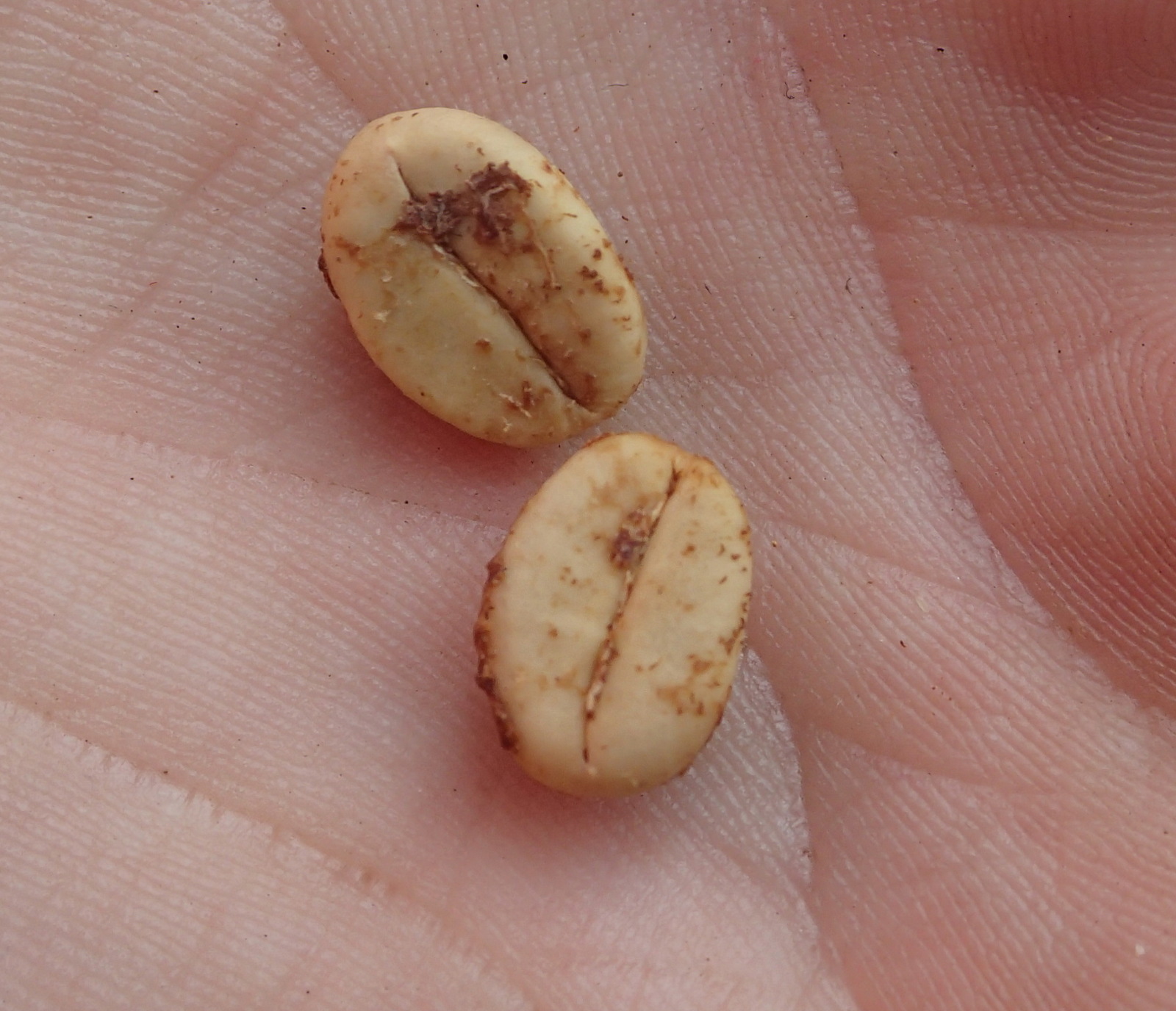
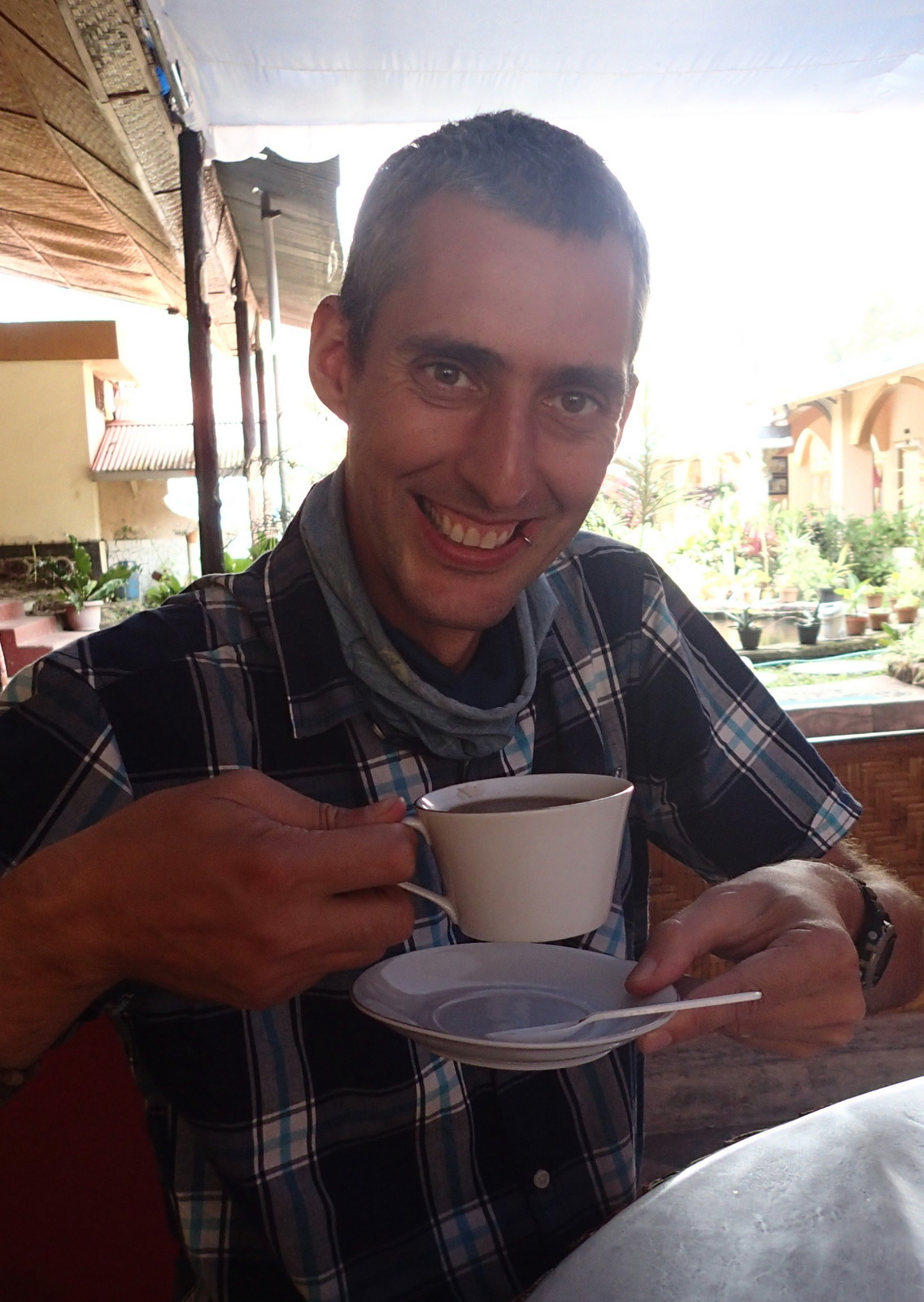
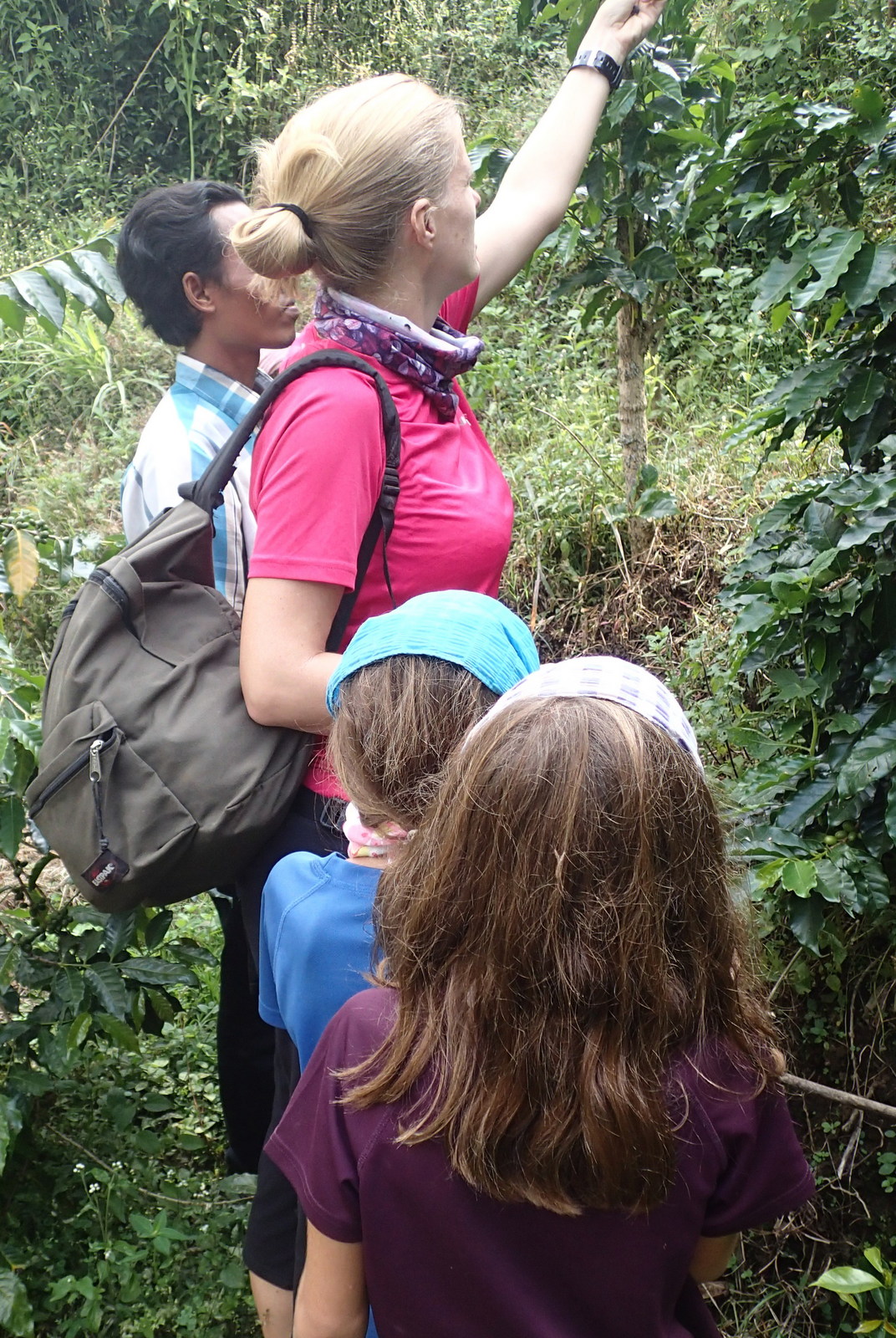
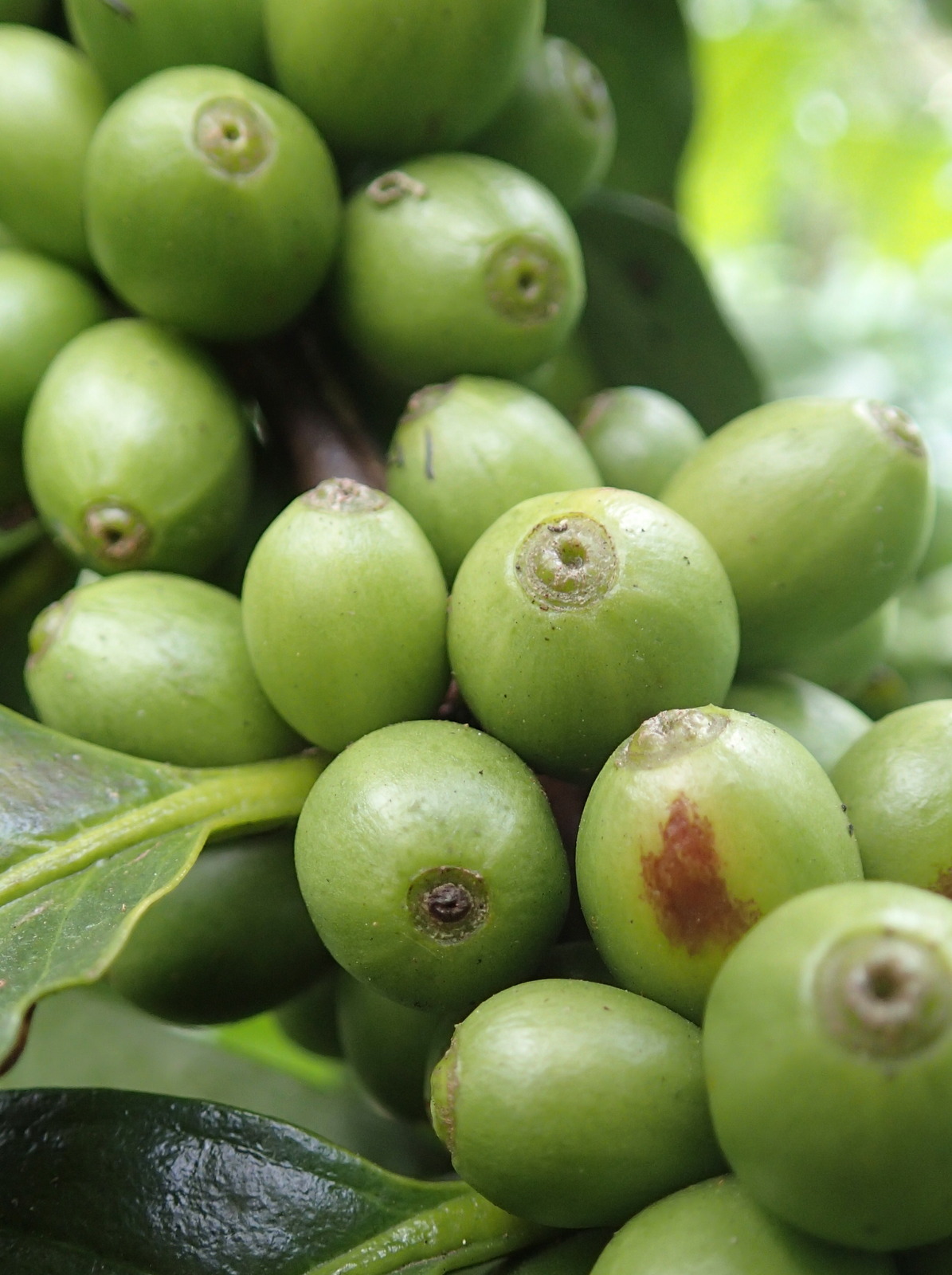
Eventually, we were able to sip our cups of delicious, fresh, Java coffee, and to see the beans being grown.

However, buying some coffee to take away with us seemed like an impossible task.  There was a glass cabinet fill of tea bags (!) with one lonely pack of Ijen Volcano Locally Produced Coffee in the corner.  After much pointing and smiling, I managed to buy the pack.  I tried to ask if they had any more (holding up 3 fingers, pointing, asking ‘You have more?’).

“Sorry, finished,” came the reply.

Like like trying to organise the proverbial party in a brewery, it seems that buying coffee in a coffee plantation is not as easy as it might sound.

OLYMPUS DIGITAL CAMERA

Raw Coffee Beans (straight from the plant, just peel the pod)

OLYMPUS DIGITAL CAMERA

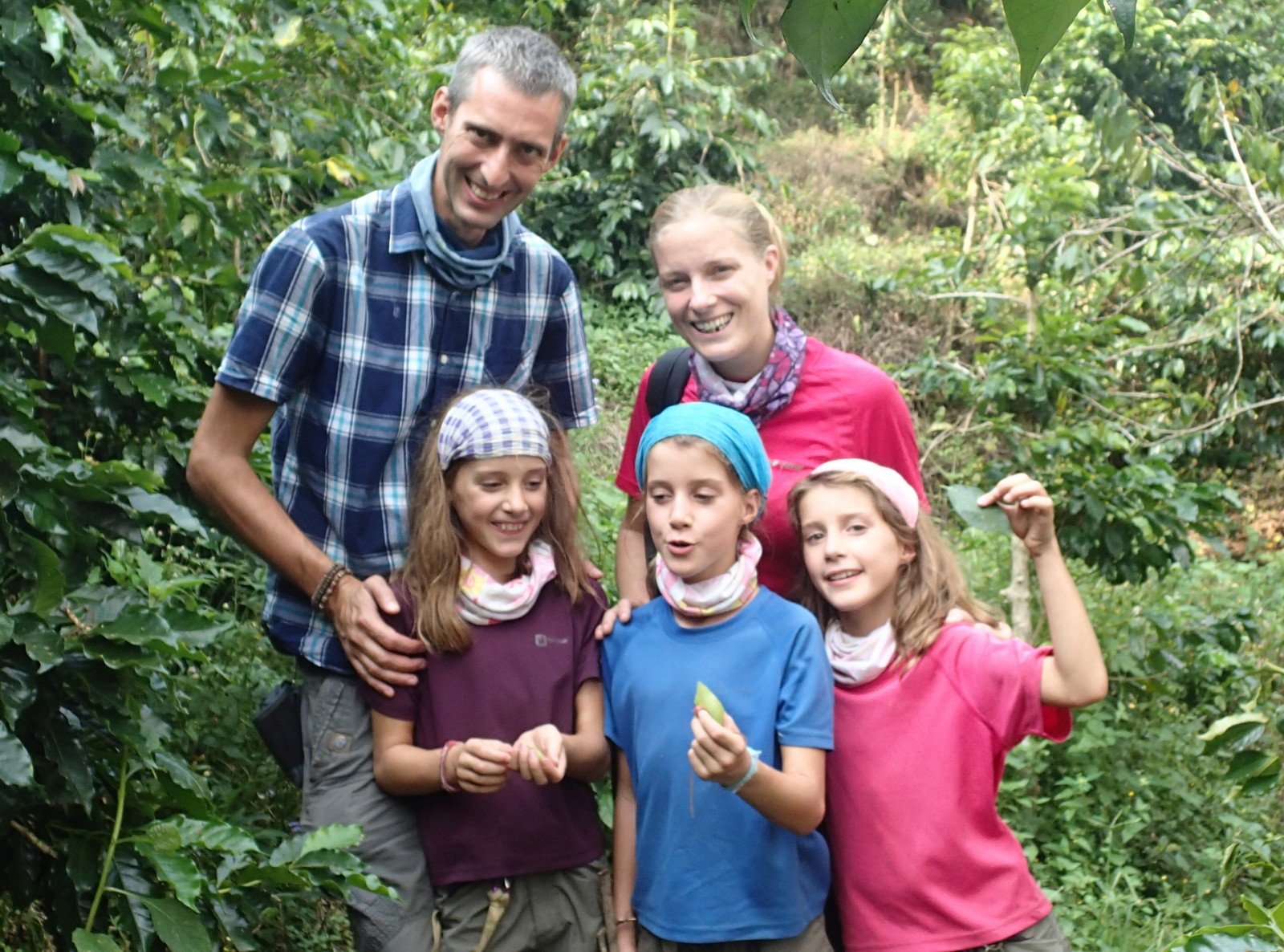
Say ‘Coffee’!

OLYMPUS DIGITAL CAMERA

Finally enjoying the long sought cop of coffee on a plantation in Java

OLYMPUS DIGITAL CAMERA

We get a lesson in coffee growing from our driver

OLYMPUS DIGITAL CAMERA OLYMPUS DIGITAL CAMERA OLYMPUS DIGITAL CAMERA

Indonesian Hospitality

We got the chance to visit an Indonesian home yesterday. The circumstances could have been better, but it did restore my slightly shaken faith in the good people of this land; I have an underlying belief that most people are nice. And it seems that most people are. But not everyone.

We should have seen the warning signs really. But after 10 hours of train travel, the offer of a private minibus from the train station all the way to our remote mountain village (rather than going to the bus station and taking a public bus) seemed like a great offer. The price was pretty cheap, and there were some French tourists heading our way also using the minibus, so we clambered on.

The first sign was that we went to their office first, where we had to disembark and pay. Not too much of a worry. Then they tried to sell us various guided tours; but not too much of a worry given that this happens a lot around here. The real warning sign was the National Park Entry Ticket they tried to sell us for 217,000 IDR each (the guide book says it costs 2,450 IDR). They had a copy of one with a date stamp, which they showed to us several times to ‘prove’ how much the price had gone up. I knew that was a scam, but we explained we would buy our National Park Entry from the park rangers, and they accepted this. We knew they were trying it on, but thought that would be the end of it.

About 4km from our destination, the minibus stopped and the driver claimed this was the park boundary (we knew from the guidebook this was not true). He tried to collect the 217,000 IDR from all of us. We all refused to pay. There was much discussion, and the Indonesian driver became very angry and insistent that we pay. He told us he wouldn’t drive us the rest of the way. He was scaring us, we didn’t like the situation at all. So, we got off the minibus and walked.

It was a grueling 4km. With a 20kg backpack each for me and Ferg, and the kids with a fair load each, we made slow progress up the seriously steep slopes in the dark. The kids did so well, no complaining, just one foot in front of the other, steadily gaining height. The Nepali training paid off. The stars were out and the mountains in shadow looked beautiful in the twilight. However, it was very hard work.

Eventually, after an hour, we stopped and sat down on our backpacks for some water and some peanuts. A family came out of a nearby house and asked us where we were heading. Neither our Bahasa Indonesia nor their English were enough for the full story, but they established that we were heading for Café Lava Hostel, it was dark and late, we had tired children and heavy bags, and they wanted to help us.

The man of the house took Ferg and a couple of bags on ahead to the hostel on his motorbike, while me and the children were shepherded inside for hot coffee, and offered some snacks. It was so lovely to be looked after by complete strangers, I found it very touching. The home was just a couple of rooms; the main front room containing a giant bed (that I suspect the whole family sleep on), a TV, a table, and stack of plastic chairs, which were laid out for us as visitors. The TV was showing what was clearly the Indonesian equivalent of the X Factor, and the family were sitting around with blankets around their shoulders (it’s cold up here in the mountains at night) drinking coffee, smoking the strange clove scented cigarettes that abound in Indonesia, and having what we would call in England a ‘Big Night In’! The house was very different to ours, the snacks and drinks completely different, but we were united by our appreciation of the X Factor and temporarily bonded over a pigeon English discussion of the merits of the various singers. What a lovely experience.

After several motorbike trips up and down the mountain, ferrying children, bags etc, we all arrived safely at our hostel. The kind man asked for no money, but we gave him some anyway. I am so glad that we met with this kindness to take away the bitter taste that the minibus driver left us with.

As we walked into the hostel, we met the French tourists from the minibus. It turns out that after a stand off, the driver eventually took them all to the destination, and the money was not paid. But hey, we had an experience on the way, and we felt safer walking. I would not have got back on his bus, who knows where he would have taken us. All’s well that ends well, and it’s public transport and meter taxis all the way for us in Indonesia from now on.

Indonesian Adventure

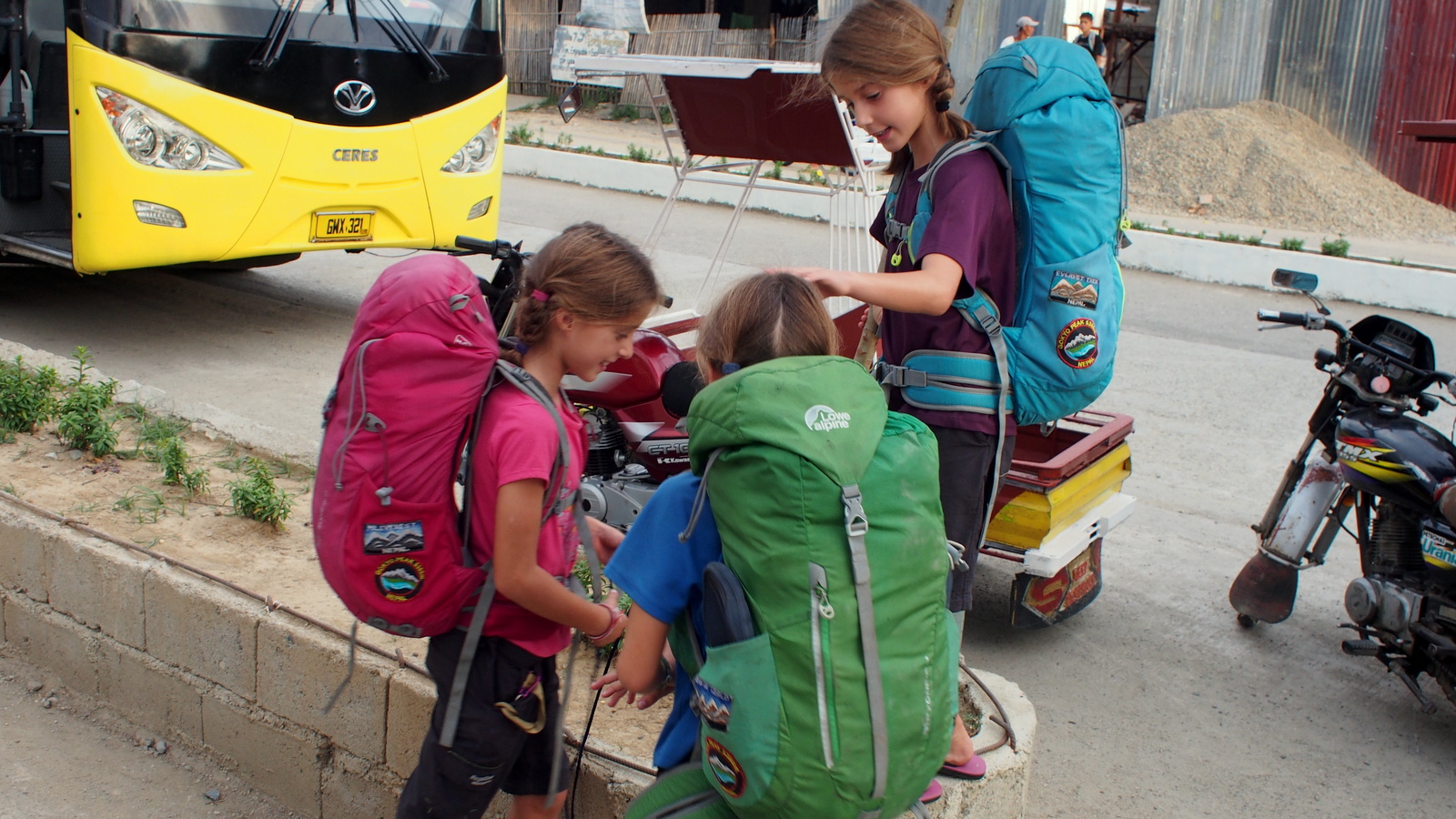
Put your backpack on, come on, come on

Put your backpack on, come on, come on

Planning ahead for our next country, Indonesia, has been on my mind for a while now. It’s a country I’ve been very much looking forward to from the moment I found out that we could walk up volcanoes there. It makes me feel like a little kid when I think how excited I will be to walk up a volcano. And what makes it even more fun is walking up one with 3 little kids!

As well as the volcano treks, there is an abundance of adventurous activities available to the backpacker who ventures into Indonesia. Of course, there’s Bali, but I think we’ll give it a miss seeing as we have seen so many wonderful beaches already. What really gets me excited is the chance to see some wildlife. There’s Komodo Dragons in their natural habitat.  Plus there’s a remote but fairly famous Orang Utan Sanctuary in a National Park on the Indonesian southern side of Borneo where you can live on a boat for a few days and spot them in the wild.

Plus, of course, Fergus wants to do some more diving.

However, joining the dots between the best volcanoes, the komodo dragons, the orang utans and the legendary dive sites leaves us with a daunting set of journeys on our hands. The initial flight to Indonesia is already a complex set of 3 airplanes with fairly long waits between them spanning a 26 hour period, thanks to schedule changes by Air Asia. And we’re 2 days travel from the airport. There’s no information online for the local companies who sometimes operate flights between our chosen destinations, and the Lonely Planet bus and boat estimates are wearisomely pessimistic e.g. 36-48 hour boat journeys – and, I quote, “Don’t expect a cruise ship.” Hmmmm.

However, I am refreshed enough by our time in the Philippines to face the challenge head on and see it as all part of the fun. The ‘travelling’ part of travelling is sometimes the best bit. I’ve seen some amazing things out of the windows of our bus/boat/taxi/train/airplane/helicopter journeys. So it is with an optimistic outlook that we set off tomorrow on what promises to be an epic, but awe inspiring, trip to Indonesia.

Falling for the Philippines

How kids should play

I’ve been feeling a bit homesick lately. Sometimes it’s the little things I miss: fresh milk; cooking my own meals; sleeping in my own bed; and of course the luxury of having no insect bites (my family call me the mosquito early warning system). I also miss the big things: seeing my parents; seeing Ferg’s family; our network of friends and family who support us.

However, over the last week or so I have totally fallen in love with the Philippines, and right now I wouldn’t want to be anywhere else in the world but right here with my family.

How to describe the Philippines? After just 20 days, I’m not qualified. The country covers a vast area, and is made up of over seven thousand islands, of which we’ve managed to see only three. Even those remain stubbornly difficult to classify: mountains, volcanoes, beaches, rice paddies, lush green valleys. You name it; the Philippines has it. In the last 400 or so years, it’s been under Spanish and subsequently American rule, leaving a mixed legacy of thousands of beautiful churches, Christianity as the national religion, meatloaf on the menu, Graham’s cracker-based desserts, and perfectly spoken, USA-accented English.

It’s the people that have made the biggest impression. Everywhere we go we encounter big smiles, people waving and saying, “Hello!” and an endearingly polite, and yet somehow giggly, way of interacting with each other and with us tourists.

Water is a big part of daily life for a nation of islanders; it’s the only place we’ve been to where locals swimming in the sea outnumber tourists. The water is crystal clear; we thought we’d seen good beaches in Thailand but every single island here has it’s own deserted stretch of white sand, turquoise water and abundant coral reefs. And here, you get the beach to yourself.

The food is also a switch-change from the rest of South East Asia. Out with the chillies and fish sauce, no Little India or Chinatown meals here. It’s all about the BBQ chicken and the stewed meat. As long as you enjoy pork, you’re fine. In fact, I think they may be trying to compensate for the below-world-average consumption of pork in the surrounding Muslim nations. It’s delicious, but seriously fatty. The fish ‘sinigang’ (a kind of sour soup) makes a healthier choice, and the rotisserie chickens are divine.

I’d challenge anyone not to fall in love with this place. With kids playing on the beach; locals swimming & fishing in the sea; all the smiling faces; the luscious countryside; outstanding trekking; historical buildings; relaxed dress code (women wear shorts and vest tops – hooray!); clear waters; brilliant diving & snorkeling; delicious food; some of the cheapest beer in the world; local rum that is cheaper than drinking water; all topped off with glorious sunshine and sunsets to remember forever, why would anyone ever want to go home?

Thank you Philippines. Homesickness: cured.

Busy Days on Sequijor

After a long laze in Sipalay, we wanted to speed things up a bit, but – wow! – the last three days on Sequijor have been so incredibly full that I could fill a blog post about each, individually. However, it’s getting late and we’re packing up and moving on tomorrow so I guess I’ll just get it all down as best I can before my kids come running back from the coconut trees on the beach to tell me how starving they are and none of it gets written down at all.

On our first day here on Sequijor, we decided to go exploring. Wandering up to the main road, we hailed a tricycle (a Philippine euphemism for a rattle-engined motorbike with equally rattley home-made sidecar) and asked the to take us round the island, stopping at the sights. It was awesome!

We visited a local park in St. Juan with a “swimming pool” (pond) where the girls swam. We stopped at some beautiful, 4-level waterfalls where we all swam, including swimming right under the falls into a hidden cave behind.

Then a coastal resort where they had built water slides and diving boards into towering cliffs over the sea. The slides were closed and partially collapsed, an unfortunate testament to ambition over realisation, but the diving boards were relatively stable-looking, so we climbed up and had a look over the edge. It was a long way down. The kind of long way that made the 10m board at the Leeds pool where our girls took diving lessons seem like jumping off a curb into a puddle. The kind of long way that would give a Mexican cliff diver second thoughts. So, of course, me and the girls all immediately jumped off.

In between, we stopped at old Spanish churches, little farming villages, a 500 year old balete tree said to be home to a powerful spirit (and which Evie climbed most of the way up when our backs were turned — no curses have yet made themselves apparent, though, so I’m guessing the spirit didn’t mind), a co-operative dairy selling real cheese and pasteurized milk (rare luxuries nowadays for us) and a few pretty view spots, eventually returning home exhausted, stimulated and still rattling from hours aboard our guide’s bone-shaking sidecar.

The next day we decided to climb a mountain. There’s only one here on Sequijor (called Mt. Bandilaan) and details on reaching the top (both on the web and our guidebooks) were kind of sketchy so weren’t entirely sure what to expect or even how to get there.

In the end, it was a very easy walk. There was a narrow paved road all the way to the top. The greatest difficulty, in fact, was convincing the various Filipinos we met along the way that we actually wanted to walk. No-one could understand why we wouldn’t use a vehicle when we could afford one.

We did get a bit lost trying to find the path to the actual summit (the road only passes nearby) but when we eventually found it, the 360° view around the island was gorgeous.

On the way down, our trike driver came and met us near the top. Once more, it took quite a lot of explaining to get across the idea that we wanted him to go back and wait for us halfway up the mountain. As he drove away, he shot us the most astonished and puzzled look I’ve seen since telling a porter in Nepal that we wanted to carry our own bags.

As the mountain had proved so easy to conquer, we decided to spend the afternoon swimming in the sea. Under “suggested places for snorkeling” in our Lonely Planet, it said “strap on your mask and fins and dive in anywhere”. So that’s what we did. Swimming out from our resort (the lovely but only-just-within-our-price-range Villa Marmarine) we saw sea grass, hard corals, tropical fish, lots of sea urchins and generally had fun splashing around in the astonishingly clear, turquoise water. Me and Jem even swam right out to a bangka moored in deeper water where we could free dive down to even more impressive reefs.

For tea we got our own back on the trepidation that all the sea urchins had given us while swimming by ordering sea urchin spaghetti from the menu. Revenge, it turns out, is surprisingly tasty.

Day three. I wanted to do a dive trip and as there was no-one else at our resort who was a diver, we were able to hire the entire boat to ourselves. I would dive while Janet and the girls snorkeled.

I wasn’t sure whether to believe the guy at our resort when he said the local marine sanctuary (Tulapos) was just as impressive as Apo Island (a famous marine sanctuary 15km from here) but it was probably the best dive I have yet done. The soft and hard corals, rainbows of fish (too many to mention), sea snakes (yes, another banded krait but this time as big as a python), gigantic lobsters and surreal nudibranches alone they would have been enough to make for an amazing dive. But while under, I swam with not one but two massive sea turtles, fulfilling a diving ambition I’ve had since I learned at New Year.

After returning, as I still had plenty of air left in my tank, and the dive boat was moored in very shallow water, I gave Jemima and Scarlett an impromptu SCUBA lesson, giving them my secondary air source and sinking down to the sea floor to explore. They loved it.

All that alone would have made for a memorable day’s diving but on the way home something even more astonishing happened: a huge school of dolphins appeared near our boat, then, when the crew started clapping and thumping the deck, swam over and raced alongside us, leaping, twisting, diving, pairing off, skimming the surface… And all the while, the long, flat-decked nose of the bangka meant we could stand right out over the water, surrounded by dolphins playing on three sides. It was magical, and, according to the crew, incredibly rare in the waters around Sequijor.

Whew! Three days of intense and thrilling experiences and I feel both awed and exhausted. Tomorrow we move to a new resort with a pool. I wouldn’t be too surprised if we ended up being less ambitious and just spend the day recovering at the poolside.

Flying Blind into the Philippines

At the time it seemed like a good idea to spend our last evening in Singapore visiting one of its famous drinking spots, Clarke Quay, where swish bars nestle along the riverfront, and well dressed, white toothed young people gaily spend fortunes on expensive drinks and fine foods. And it was definitely part of the Singapore experience.

But at 5am the next morning, when the alarm rang for our flight to the Philippines, it was hard not to regret the lack of sleep, muddled hungover head, exhausted children and considerably lighter wallet our trip to the waterfront had provided us.

Still, we made the flight, and collapsing, bleary-eyed and exhausted into our seats, got out the guidebook and tried to decide where to go in this new, unfamiliar country. Having no real idea what to expect from the Philippines, for the first time since arriving in Nepal, we were going in blind, having neither booked anywhere to stay nor even decided which town (or even which island) to stay in.

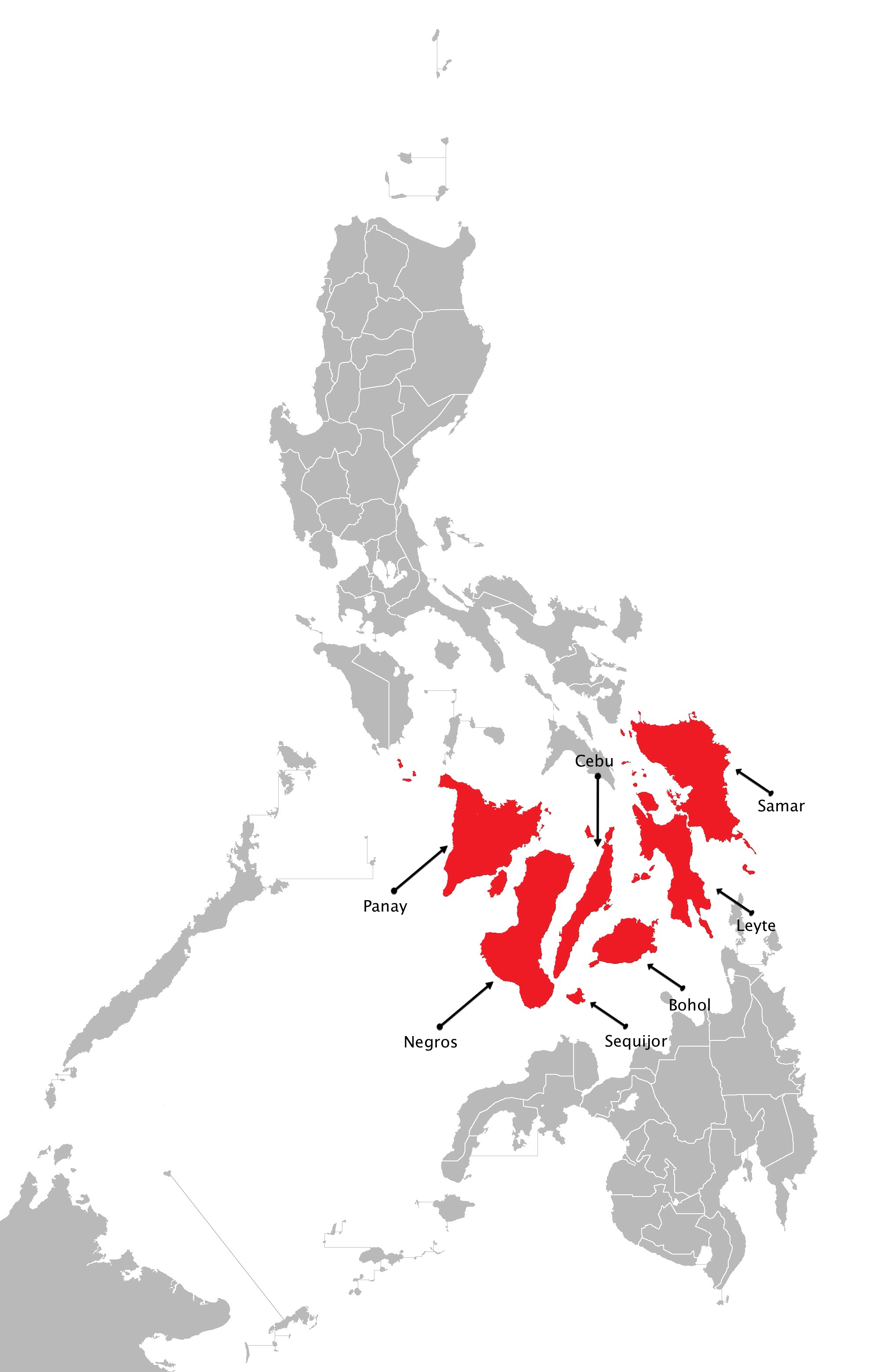
While we were flying into Cebu, it was obvious from our guidebook that we would want to get away from Cebu City as soon as we could. Should we head elsewhere on Cebu island? Hop over to a different one? But then… which of the surrounding islands to choose? Cebu is in the centre of the Visayas, a group of islands towards the south of the country, all of which sounded appealing in their own ways but tricky enough to travel between that we would have to just choose a few to hop between during our eighteen days in the country. Should we choose rugged Leyte, chilled-out Bohol, witchcraft-haunted Siquijor, beach-paradise Malapascua, dive-mecca Panglau…

The Visayas, the Philippines

The Visayas, the Philippines

Eventually we plumped for Negros, persuaded by the Lonely Planet’s introduction of, “if one island has it all”. With diving, hiking up the regions tallest peak, caving, snorkelling, beautiful, remote beaches, and, most appealing, a capitol (Dumaguete) lacking the usual chaos and hustle of Filipino cities and charmingly nicknamed The City of Gentle People. It looked just the place to stop, settle in, get our bearings and familiarise ourselves a little with Filipino culture.

Unfortunately, reaching Dumaguete also meant extending our already exhausting journey into an epic dash across the region, involving multiple taxis, long-distance buses, trikes and ROROs with increasingly exhausted kids in tow and without any guarantee of a bed at the end of our journey.

From start to finish, getting here took seventeen hours. It was sometimes fraught, occasionally baffling and not knowing if we would arrive too late to find a room or if we’d even get to somewhere with accommodation by the time we ran out of transport links added a constant anxiety. But everyone we met was friendly and helpful, and considering that we started the day unfamiliar with the Philippines, we got to see a broad range of places through various windows (and hanging off trikes) that have helped us get a sense of where we are.

And we made it.

Our first choice of hotel had rooms, is clean, comfortable and friendly, and positioned right on the promenade. As I came out to Janet where she waited by our overloaded trike still stuffed with bags and sleepy children and gave her the thumbs up, we all cheered, checked in at lightning speed, threw ourselves into bed with a real sense of exhausted a

It's gone dark but we're still on the road (or the ferry in this case – from Cebu to Negros)

It’s gone dark but we’re still on the road (or the ferry in this case – from Cebu to Negros)

ccomplishment and had fallen asleep within moments.


Much of the thrill of travelling is to launch yourself into the unknown but to come through, tired but invigorated from having experienced the unexpected. It was exhilarating, winging our way here and I feel like we’re really travelling again after the comfortable modernity of Singapore, all the prebooking we had to do in Thailand and Malaysia and staying still for so long in Nepal.

But I think we’ll stay still for a day or two now.>