In The Mist

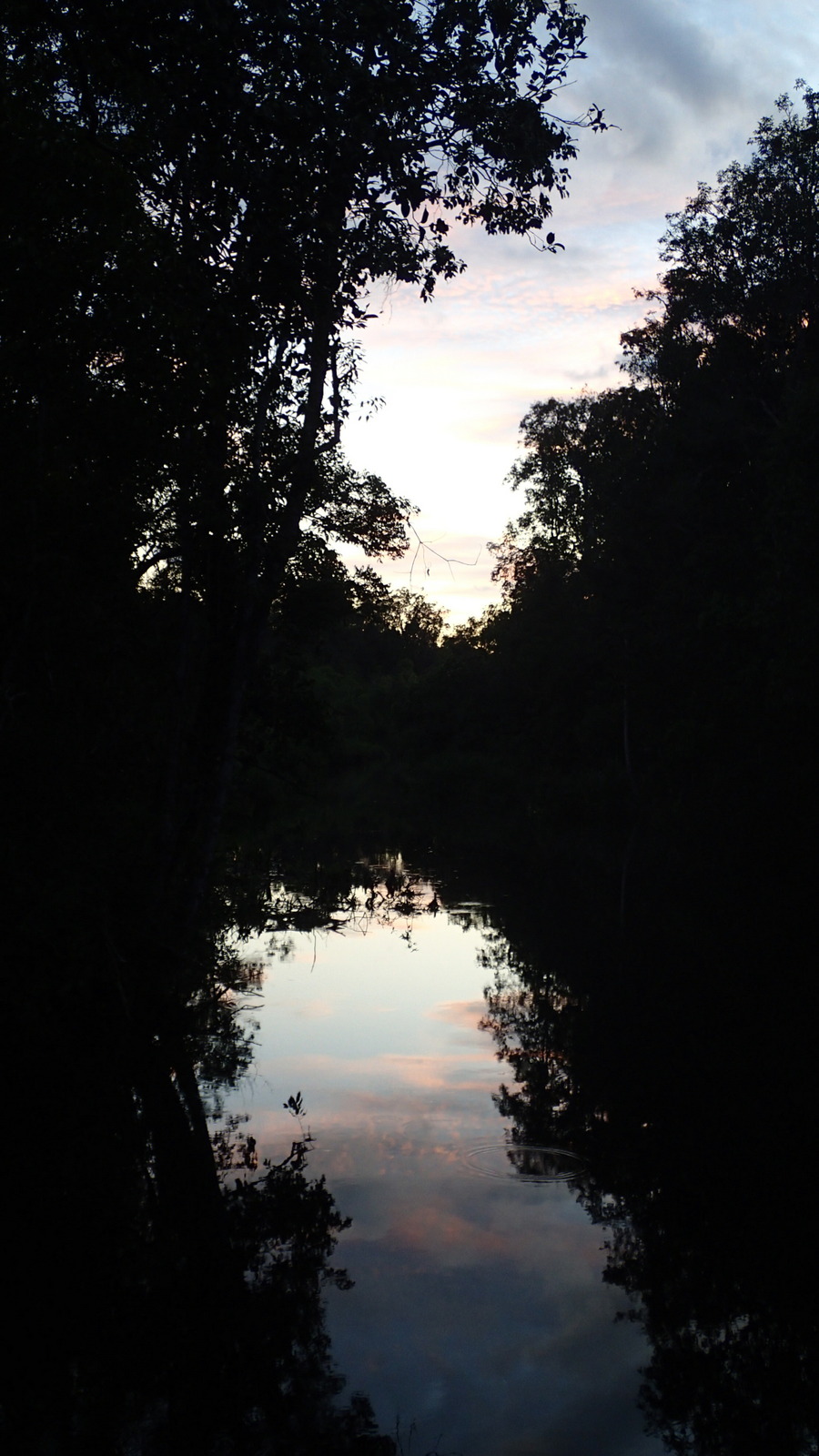
Dawn in Tanjing Puting

It’s early morning – not even five-thirty – and I’m standing alone on the open deck of our klotok, the wide-decked, open-sided river boat we’ve hired for three days of travel deep into the jungles of Borneo. I feel a very long way from home.

All around, the river water is a peaty red, darkening to glossy black away from the banks where it flows smoothly past our mooring. The blackness is broken only by the reflection of the brightening sky and the occasional deep splash of a surfacing fish. With each splash I turn quickly, hoping I’ll see one of the crocodiles that ate the traveller who ignored warnings not to swim on this very spot a few years ago. I don’t see any but that doesn’t mean they aren’t nearby. The shadows, reeds and fallen trees along the banks could easily hide a dozen crocodiles.

My eyes search the thick jungle swamps on each bank. There are macaques here. I can hear their woo-wooing nearby but haven’t managed to spot any yet. Not that I’m surprised. Their fur blends perfectly with the soaring white-grey tree trunks. Nor have I seen kingfishers, fly-catchers, hornbills, tree frogs, proboscis monkeys or any of the other thousands of species that make this a “biodiversity hotspot”. Only the insects are visible this morning; dragonflies the length of my middle finger, bees, beetles and smaller, indeterminate creatures I hear as passing buzzes beside my ear. And if our trek into the jungle yesterday is anything to go by, I wouldn’t have to go far from our boat to find thick columns of termites or wild, dangerous scatterings of the fire ants that we all fell painfully prey to.

But I don’t mind that I can’t see anything just now. The forest is alive with life. I can hear it. And somehow, gazing out into the confusion of trees, vines, ferns, water plants and bushes, ears alight with whoops, clicks and bird calls, this feels like the most natural state in the World; in distinguishing the complexities of these sights and sounds, I feel my brain slipping into its natural gear. There isn’t a straight line in sight, nor a single colour that diverges from the forest’s natural greens, greys and browns, except with reds and blacks of the water below and the blue of the lightening sky.

I wonder if any of the orangutans we saw yesterday are nesting nearby. And whether this sensation of oneness and peace is how they feel. Their slow, measured gazes and the way they swing through the treetops at whatever speed each tree bends under their weight seemed to imply so.

We’re moored at Camp Leakey, the longest-running research station in the World, where for the last 40 years , Dr. Galdikas has been observing wild orangutans as well as rehabilitating captured ones.

These thoughts are heightened by the thrill of being so far from civilization. There isn’t a hospital for many hundreds of miles and few roads through the jungle on which to reach one… well, except the charity-run orangutan hospital half-way up-river. I guess they could probably set a broken bone at a push.

It took two full days to get here but today we’ll turn our klotok around and begin the return journey, stopping to visit one more orangutan feeding station on the way. This is the remotest place we’ll visit on our travels. From here on we’ll slowly be returning to modernity.

I was going to end there, leaving this post as an elegy on Man’s Primal Being, Oneness With Nature and other romantic daybreak thoughts. But then…

With a crash, a tree beside us swung forwards, showering leaves onto the river. For a moment I couldn’t see what had caused the sudden commotion. The jungle fell silent. Then, the tree snapped back, the leaves spread out into the current, leaving a single, large orangutan a few metres from where I stood. He watched me. I watched him. As entrances go, I had to admit it was impressively dramatic. Then he swung over to where our boat’s mooring rope secured us to a fallen tree.

Was he going to pull us to shore? Come aboard? He gave the rope an exploratory tug but our klotok is big and would have needed a much more serious effort to shift. Looking disappointed, he gave up and climbed onto a comfortable-looking tree, descending occasionally to pick a pandanas shoot or fish a discarded piece of fruit from the water.

Slowly, the rest of our family awoke, drifting forwards to join the mutual contemplation, orang1 and orangutan.

Then the other klotok moored nearby woke up, too, and began calling and throwing watermelon rinds into the river. The spell was broken; the orangutan moved off and we retreated inside for a breakfast of our own.

[1] In both Indonesian and Malay, orang means “man”. Orang utan means “man of the forest”.
Buying Coffee in a Coffee Plantation

Sounds easy, doesn’t it?

After paying our driver extra to make a detour to a remote coffee plantation we’d read about, we wanted to fulfill our dream of sipping coffee in a coffee plantation in Java.  We had images of strolling through the fields in pressed linen suits, as per the Kenko advert from the ’80’s.

We must have left the pressed linen behind somewhere, so we had to make do with our just-climbed-a-volcano clothes (think volcanic ash, sulphur stains, faint eggy smell).  And it took quite a long time to find anyone to serve us in the coffee shop part of the plantation. And a bit longer to establish that we might want to buy some coffee.

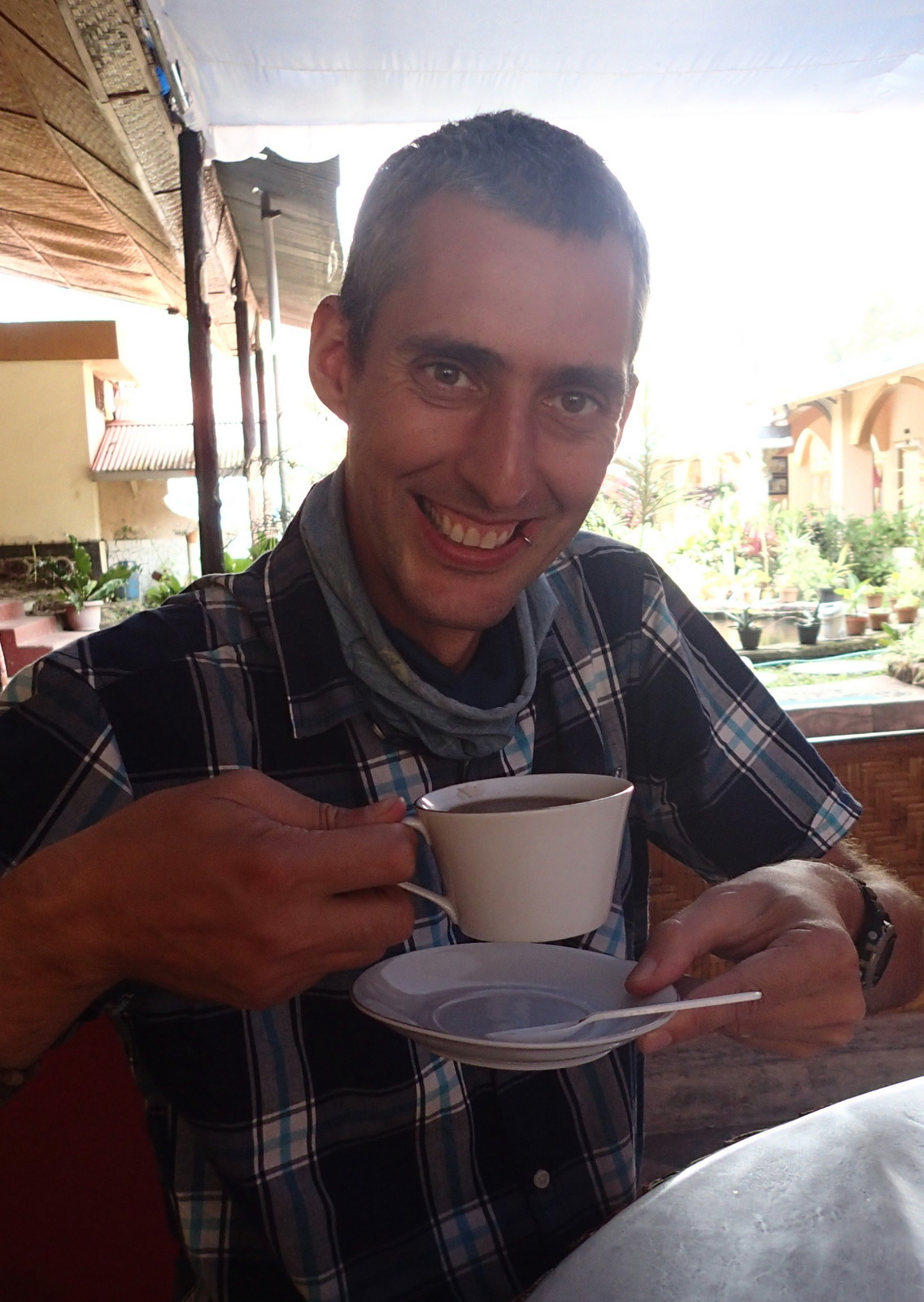
Eventually, we were able to sip our cups of delicious, fresh, Java coffee, and to see the beans being grown.

However, buying some coffee to take away with us seemed like an impossible task.  There was a glass cabinet fill of tea bags (!) with one lonely pack of Ijen Volcano Locally Produced Coffee in the corner.  After much pointing and smiling, I managed to buy the pack.  I tried to ask if they had any more (holding up 3 fingers, pointing, asking ‘You have more?’).

“Sorry, finished,” came the reply.

Like like trying to organise the proverbial party in a brewery, it seems that buying coffee in a coffee plantation is not as easy as it might sound.

OLYMPUS DIGITAL CAMERA

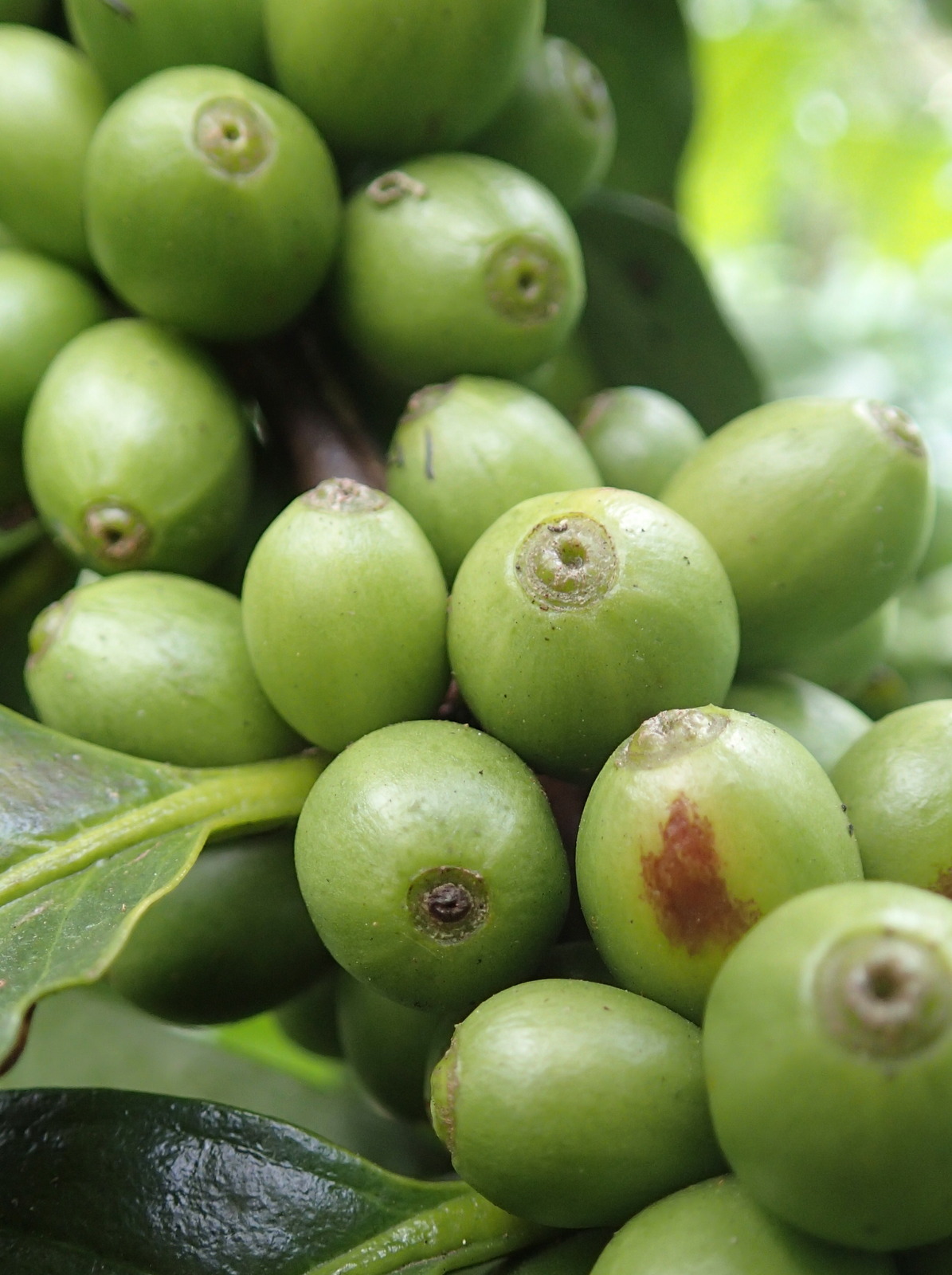
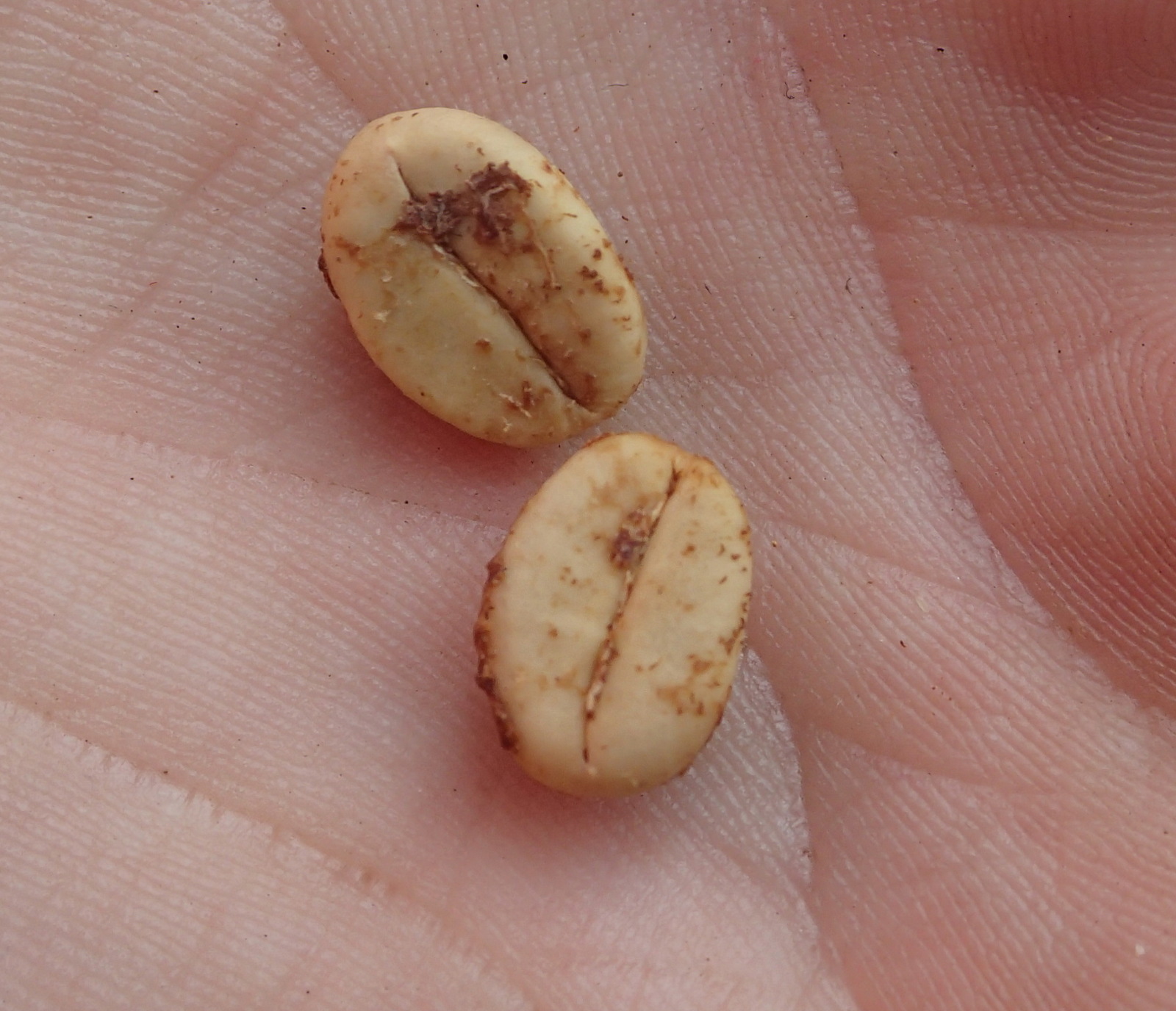
Raw Coffee Beans (straight from the plant, just peel the pod)

OLYMPUS DIGITAL CAMERA

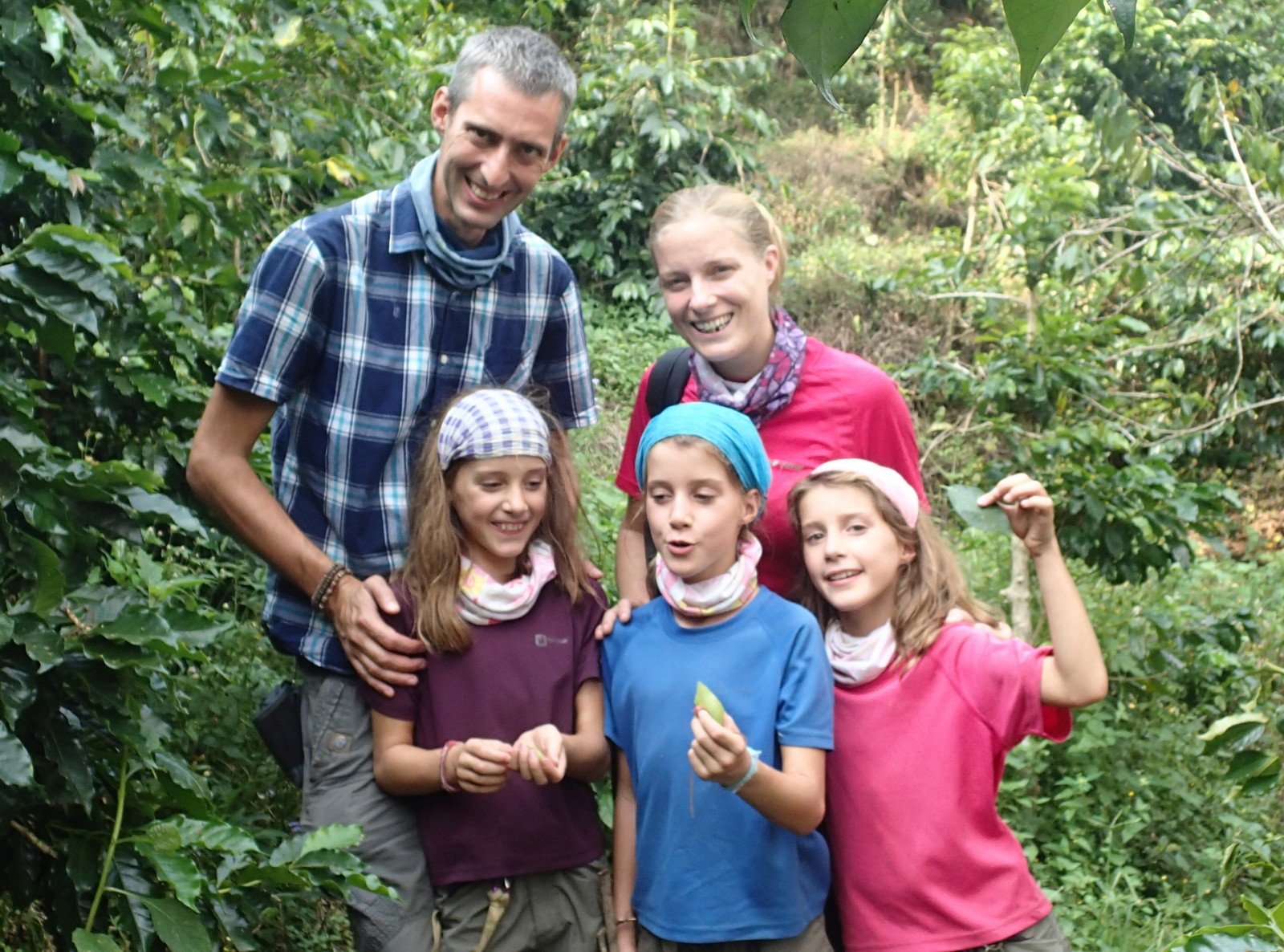
Say ‘Coffee’!

OLYMPUS DIGITAL CAMERA

Finally enjoying the long sought cop of coffee on a plantation in Java

OLYMPUS DIGITAL CAMERA

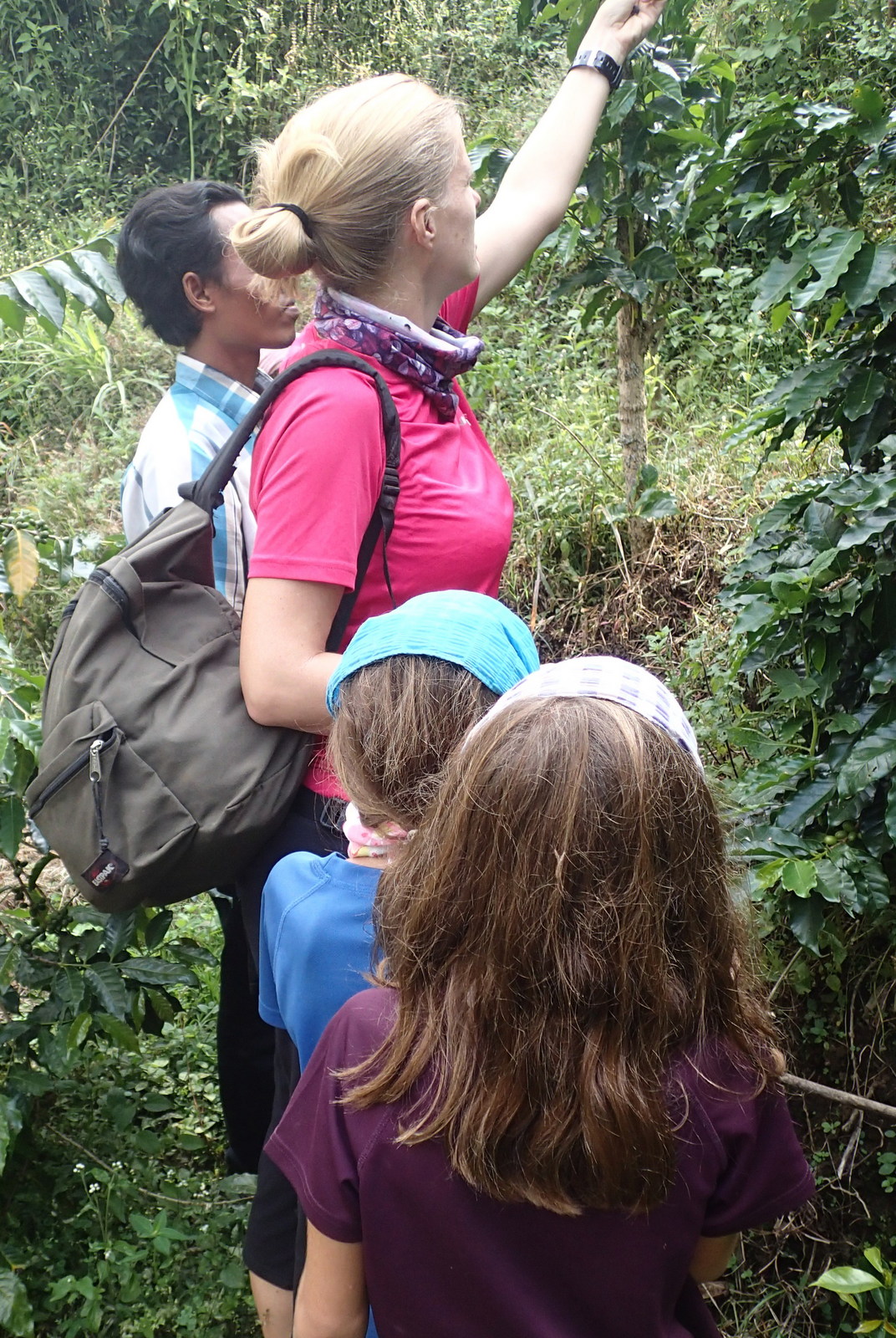
We get a lesson in coffee growing from our driver

OLYMPUS DIGITAL CAMERA OLYMPUS DIGITAL CAMERA OLYMPUS DIGITAL CAMERA

Indonesian Hospitality

We got the chance to visit an Indonesian home yesterday. The circumstances could have been better, but it did restore my slightly shaken faith in the good people of this land; I have an underlying belief that most people are nice. And it seems that most people are. But not everyone.

We should have seen the warning signs really. But after 10 hours of train travel, the offer of a private minibus from the train station all the way to our remote mountain village (rather than going to the bus station and taking a public bus) seemed like a great offer. The price was pretty cheap, and there were some French tourists heading our way also using the minibus, so we clambered on.

The first sign was that we went to their office first, where we had to disembark and pay. Not too much of a worry. Then they tried to sell us various guided tours; but not too much of a worry given that this happens a lot around here. The real warning sign was the National Park Entry Ticket they tried to sell us for 217,000 IDR each (the guide book says it costs 2,450 IDR). They had a copy of one with a date stamp, which they showed to us several times to ‘prove’ how much the price had gone up. I knew that was a scam, but we explained we would buy our National Park Entry from the park rangers, and they accepted this. We knew they were trying it on, but thought that would be the end of it.

About 4km from our destination, the minibus stopped and the driver claimed this was the park boundary (we knew from the guidebook this was not true). He tried to collect the 217,000 IDR from all of us. We all refused to pay. There was much discussion, and the Indonesian driver became very angry and insistent that we pay. He told us he wouldn’t drive us the rest of the way. He was scaring us, we didn’t like the situation at all. So, we got off the minibus and walked.

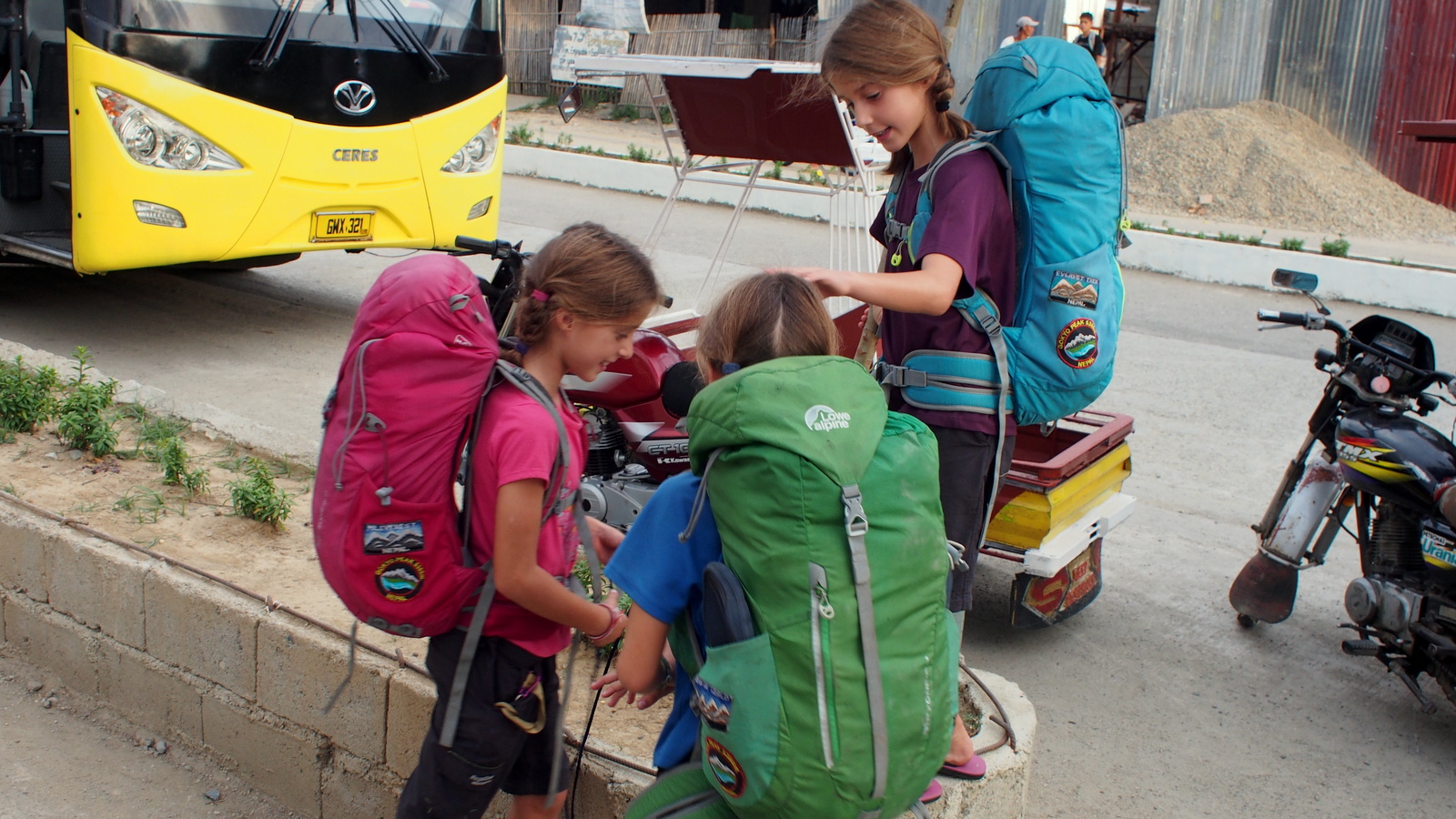
It was a grueling 4km. With a 20kg backpack each for me and Ferg, and the kids with a fair load each, we made slow progress up the seriously steep slopes in the dark. The kids did so well, no complaining, just one foot in front of the other, steadily gaining height. The Nepali training paid off. The stars were out and the mountains in shadow looked beautiful in the twilight. However, it was very hard work.

Eventually, after an hour, we stopped and sat down on our backpacks for some water and some peanuts. A family came out of a nearby house and asked us where we were heading. Neither our Bahasa Indonesia nor their English were enough for the full story, but they established that we were heading for Café Lava Hostel, it was dark and late, we had tired children and heavy bags, and they wanted to help us.

The man of the house took Ferg and a couple of bags on ahead to the hostel on his motorbike, while me and the children were shepherded inside for hot coffee, and offered some snacks. It was so lovely to be looked after by complete strangers, I found it very touching. The home was just a couple of rooms; the main front room containing a giant bed (that I suspect the whole family sleep on), a TV, a table, and stack of plastic chairs, which were laid out for us as visitors. The TV was showing what was clearly the Indonesian equivalent of the X Factor, and the family were sitting around with blankets around their shoulders (it’s cold up here in the mountains at night) drinking coffee, smoking the strange clove scented cigarettes that abound in Indonesia, and having what we would call in England a ‘Big Night In’! The house was very different to ours, the snacks and drinks completely different, but we were united by our appreciation of the X Factor and temporarily bonded over a pigeon English discussion of the merits of the various singers. What a lovely experience.

After several motorbike trips up and down the mountain, ferrying children, bags etc, we all arrived safely at our hostel. The kind man asked for no money, but we gave him some anyway. I am so glad that we met with this kindness to take away the bitter taste that the minibus driver left us with.

As we walked into the hostel, we met the French tourists from the minibus. It turns out that after a stand off, the driver eventually took them all to the destination, and the money was not paid. But hey, we had an experience on the way, and we felt safer walking. I would not have got back on his bus, who knows where he would have taken us. All’s well that ends well, and it’s public transport and meter taxis all the way for us in Indonesia from now on.

Indonesian Adventure

Put your backpack on, come on, come on

Put your backpack on, come on, come on

Planning ahead for our next country, Indonesia, has been on my mind for a while now. It’s a country I’ve been very much looking forward to from the moment I found out that we could walk up volcanoes there. It makes me feel like a little kid when I think how excited I will be to walk up a volcano. And what makes it even more fun is walking up one with 3 little kids!

As well as the volcano treks, there is an abundance of adventurous activities available to the backpacker who ventures into Indonesia. Of course, there’s Bali, but I think we’ll give it a miss seeing as we have seen so many wonderful beaches already. What really gets me excited is the chance to see some wildlife. There’s Komodo Dragons in their natural habitat.  Plus there’s a remote but fairly famous Orang Utan Sanctuary in a National Park on the Indonesian southern side of Borneo where you can live on a boat for a few days and spot them in the wild.

Plus, of course, Fergus wants to do some more diving.

However, joining the dots between the best volcanoes, the komodo dragons, the orang utans and the legendary dive sites leaves us with a daunting set of journeys on our hands. The initial flight to Indonesia is already a complex set of 3 airplanes with fairly long waits between them spanning a 26 hour period, thanks to schedule changes by Air Asia. And we’re 2 days travel from the airport. There’s no information online for the local companies who sometimes operate flights between our chosen destinations, and the Lonely Planet bus and boat estimates are wearisomely pessimistic e.g. 36-48 hour boat journeys – and, I quote, “Don’t expect a cruise ship.” Hmmmm.

However, I am refreshed enough by our time in the Philippines to face the challenge head on and see it as all part of the fun. The ‘travelling’ part of travelling is sometimes the best bit. I’ve seen some amazing things out of the windows of our bus/boat/taxi/train/airplane/helicopter journeys. So it is with an optimistic outlook that we set off tomorrow on what promises to be an epic, but awe inspiring, trip to Indonesia.